8 Comments

Fixing a Frankenstein Faith: Ten Distortions of Scripture and How to Correct Them

In yellow lamplight I stayed up late the other night talking with my wife, burdened about another church gone to seed in Texas.

The sect looks so much like my former church in Maine, a Bible cult which maximized suffering and overlooked grace. The platitudes and sermons coming from the group sound so familiar they almost seem scripted. It’s as if every unhealthy church reads from the same dysfunctional playbook—merely making minor changes in regard to set, costume, and character.

I felt discouraged, until I remembered that there is still one Hero who can swoop down to save the day. No matter how much a Christian group twists scripture—no matter how fearful or controlled the people become—Jesus can still rescue them.

The Situation: Mutually Exclusive Exclusiveness

The group I have in mind is representative of a thousand other groups, each of whom believes it alone possesses the truth. While giving lip service to the idea that there are other genuine believers scattered around the world, in practice they believe that everyone else is a false Christian. They believe that they alone have interpreted Scripture correctly, and that they alone will be saved in the latter days. This helps them to rationalize their cruel behavior toward the “unelect,” that is, anyone with the audacity to stand against the claims of their leader.

competing_christian_sectsThe hubris of these sects is astounding. Each group believes that they have discovered true Christianity as God intended; that through much dint of effort they have returned to the fold of Christ; and that the rest of the professing Church is a synagogue of Satan.

Oh really? A synagogue of Satan? How ironic. Because that’s exactly what the other exclusive groups think about your exclusive group.

The irreconcilable paradox is that if these isolated groups discovered each other—not the “liberal” mainline churches, mind you, or the “3000-mile-wide-but-one-inch-deep” evangelical Church, but the tiny, tenacious, tunnel-vision groups popping up all over the place who believe that they alone are the elect—they would fight like cats and dogs in a theological version of King of the Mountain.

“We have the truth!” one group would shout. “No, no! We do!” a second would cry. “Come to our little church and be saved!” a third would chime in. They would bloody each other—these elite Christian sects—like pugilists in the ring, well aware that their exclusiveness makes them mutually exclusive. After all, if you alone have the Truth, then that other group from Missouri or Maine or Michigan must not.

At the end of the day each sect would slink back to its rarified community in complete isolation, damning the world—humbly, of course, and with much praising of God—and decrying the arrogant errors of the other groups.

The Problem: Heterodoxy Leads to Heteropraxy

Despite the geographical distribution of sects, cults, and spiritually abusive churches, most of these groups function in very similar ways. They have twisted the meaning of scripture and have left the straight path of doctrine (orthodoxy). Instead, their distorted belief (heterodoxy) leads to distorted practice (heteropraxy).

twisting_scriptures_equals_frankenstein_faithIn other words, they behave badly because they believe wrongly.

Rather than outright heresy such as denying the deity of Christ, their errors are often subtle distortions of scripture. They can trot out a hundred verses to support their position, sure, but each verse is wrenched out of context like a Christmas bulb pulled from a tree. Thrown on the floor and trampled into broken crystals by the clumsy feet of false interpretation, these verses become a wounding snare to the people who profess them.

In this upcoming series I want to focus on ten distortions of Scripture which my own cult practiced—and which I see cropping up time and again in other spiritually abusive ministries.

Notice that I call these “distortions” rather than lies. They are lies, of course, but they are lies which start with a truth and then twist it ever-so-slightly out of plumb to create a Frankenstein monstrosity.

We want to fix this Frankenstein faith.

Distortion #1: Love Thy Neighbor But Hate Thy Parent

Distortion #2: “Because I’m Your Pastor/Elder/Spiritual Leader, that’s Why!”

Distortion #3: Vestigial Organs in the Body? Natural Family vs. Spiritual Family

Distortion #4: Brother’s Keeper: Surveillance in Spiritually Abusive Churches

Distortion #5: “It Says in Deuteronomy…”: Misuse of the Old Testament

Distortion #6: God or Mammon: Logical Fallacy of the Excluded Middle

Distortion #7: I Committed Adultery Watching the Smurfs: James 4:4 Unpacked

Distortion #8: You Shall Be Holy Unto Me (So Ditch the Budweiser)

Distortion #9: “We Alone are the ‘Remnant,’ all 75 of Us!”

Distortion #10: Fun in the Shun? Confessions of an Excommunicator

Stay tuned for these upcoming posts…

17 Comments

Whelp, there it is: 15 Signs of False Humility

The leader of a Texas sect once wrote a letter to me in which he said that he wished he could open a vein for me in order to save my soul. That sounded quite nice, though I already follow Jesus—a point I had (fruitlessly) made in several private Facebook messages back and forth with this man.

false-humilityHe then went on to call me a wicked wolf, a dog, a false prophet, a seared-conscience liar, and a “territorial bear robbed of her whelp while the flames of hell animate your heart.” I’m not sure what that means, but it sounds unflattering.

He wrote all of this because I had published a post questioning his group’s beliefs and practices after the leaders let a baby die instead of seeking medical intervention. They then tried to raise the child from the dead for fifteen hours before calling 9-1-1.

Let me say that again, in case you missed it: the leaders of this group let a baby die.

They let her die.

Details, details, said the leader, in effect. Oops, we made a mistake. Could have happened to anyone. Who are you to judge? And by the way, you’re a sinner, so we don’t have to listen to you anyway.

He then went on to speak about his group’s exceeding devotion to God and how much they had sacrificed for the kingdom. Indeed, he said, they were at risk of being martyred because of their great piety to reach out to dangerous people. And the whole 14-page letter was chock full of Bible verses and written in 17th century thee-and-thou English. I believe this is because the group perceives that they live in a corrupt age and so they have decided to revert to ancient English in order to remain pure. Because everyone was much holier in the 1600s.

I sat on the letter for a year, more amused than offended. But after mulling it over, I think there’s gold hidden in all that flint. And I no longer feel amused, because I think God feels angry when proud people hide behind religious words in order to appear humble. A lot of cult leaders and spiritually abusive people delight in false humility.

puritansIn Colossians 2, the Apostle Paul describes false teachers who delight in self-imposed worship, false humility, and the harsh treatment of the body. Their regulations appear wise, he says, but in fact they lack any value in restraining sensual indulgence. False humility is the worldly counterfeit of genuine modesty and grace. Such empty philosophy is just rules taught by men, no matter how many thee’s and thou’s you throw in.

So how can we tell the difference between false humility and true humility? Let me offer some suggestions.

Fifteen Signs of False Humility:

  1. Uses Religious Terms to Justify Cruel or Questionable Behavior. But a humble person refuses to use spiritual-sounding words as a smokescreen for sin.
  2. Preoccupied with Self. But a humble person is as actively interested in others as in himself.
  3. Listens to Others Only in Order to Speak into their Life. But a humble person listens to others with loving interest and with an expectation to learn and grow.
  4. Admits Small Sins but Ignores Major Sins (Image Control). But a humble person admits sin and also receives an honest rebuke no matter how lowly the source.
  5. Inability to Laugh at One’s Self When Others Do the Joking. But a humble person sees the humor in his own paradox of sin and sanctification. He can laugh at his own expense, because he knows that his worth is based not on impressing people but rather in the reality of being loved by God.
  6. Publicizes Her Own Sacrifices to Impress Others. But a humble person avoids broadcasting her sacrificial labor.
  7. Uses Himself as the Standard for Other’s Performance. But a humble person looks at the life of Jesus as the example, and points people to him.
  8. Affects a Humble Tone of Voice While Saying Proud Things. But a humble person doesn’t need to affect his tone of voice to sound mealy-mouthed in order to convince others that he is humble.
  9. Believes that Eschewing Money or Fame is the Same Thing as Being Humble. But a humble person understands that pride comes from the heart, not from possessions.
  10. Professes Love for God and Neighbor but Acts in a Cruel Manner. But a humble person is consistent between what she says and what she does.
  11. Delights in Debate rather than in Dialogue. But a humble person sees conversation as a two-way street with much to learn, not as a battle to win or lose.
  12. Is Easily Offended. But a humble person is quick to listen, slow to speak, and slow to become angry.
  13. i'm-humble-722111Believes that Asceticism Leads to Holiness. But a humble person recognizes that sin comes from the heart, not from pleasure.
  14. Loves to Impose His Opinion on Others as Truth. But a humble person acts charitably to all, thinks the best of others, and avoids presenting his opinion on a disputable matter as ultimate Truth.
  15. Enjoys Judging Other People. But a humble person hands judgment over to God and instead busies herself with loving her neighbor and serving God.

And here’s a bonus sixteenth sign: people who exhibit false humility spend a lot of time telling you how humble they are.

Spiritually abusive people understand that God values humility. They also realize that few people follow an obviously proud person. So they cloak their cruel behavior with religious-sounding language and get offended when other people question their motives.

As Jesus said, leave them. They are false teachers.

Maketh them feel like territorial bears, robbed of their whelps.

18 Comments

Why We Tolerate Psychotic Pastors

Put down your pitchforks.

This blog is not about bashing pastors—please hear me.

There are many fine Christian leaders who have a pastoral gifting and who live out their lives in sacrificial service to God’s people. They are called by God, recognized by the people of God, sustained by the Spirit, and often endure great hardship as they labor faithfully in the vineyard of the Lord. I graduated from a large seminary, currently work at a small seminary, and have numerous friends who serve as leaders in the church. I hold several pastors in very high esteem. They are worthy of double honor.

This post is not about those many good folk.

Businessman silhouetteInstead, I want to focus on a small subsection of pastors. The few who are so abusive in their leadership that some of us wonder if there might be more going on than simple ineffectiveness, obtuseness, or—as they say in the South—“ahnry-ness.” The few who demonstrate mental illness or personality disorders, whether subtle or obvious.

In short, sometimes an abusive pastor really is psycho.

Since many evangelical subcultures misinterpret the Bible and frown on calling out sin in leaders—labeling such confrontation as “gossip” or “slander”—some truly bad pastors are allowed to continue to abuse congregations year after year.

Why is this? Can’t the congregation recognize that they are being abused? Further, can’t they see if a pastor is psychotic?

Sometimes they can. But more often, they can’t.

And lest we think that only Christians struggle with such winkin’-blinkin’-and-nod enablement of abuse, there are correlations in the business world.

Survival of the Meanest?

In a recent article in Today titled “Sometimes, the boss really is a psycho” Allison Linn describes how some bosses seem to demonstrate signs of mental illness. No kidding. But she goes on to point out that many employees or supervisors tolerate such deranged, abusive behavior if it gets results. They rationalize it away or are so charmed by the person that they overlook signs of mental illness and abuse.

I have included some excerpts from the article below. As you read, think about how you might have seen similar dynamics at work in your unhealthy church.

“There are whole climates and cultures of abuse in the workplace,” said Darren Treadway, an associate professor at the University of Buffalo’s school of management. His recent research looks at why bullies are able to persist, and sometimes even thrive, at work.

He said many people have either seen or experienced bullying at work because some bullies are skilled enough to figure out who they can abuse to get ahead, and who they can charm to get away with it.

“The successful ones are very, very socially skilled,” he said. “They’re capable of disguising their behavior.”

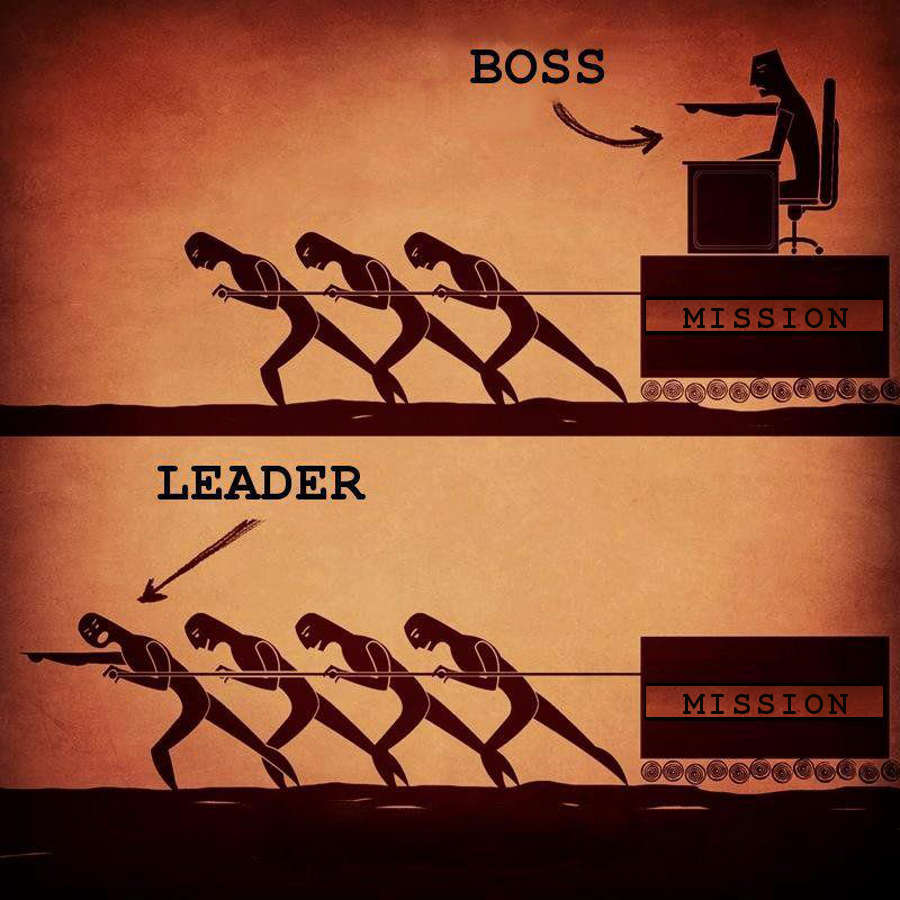
boss-vs-leader-800x800Smart bad bosses can be hard to spot, some experts say, because they are extremely good at manipulating and charming some people, while abusing others. Industrial organizational psychologist Paul Babiak first grew interested in studying psychopaths at work after he was called in to consult for a dysfunctional team. He found an abusive, lying boss — and a team that was staunchly divided into two camps.

“(There was) a subset of the team that really loved this guy — idolized him — and then there was another group of people who thought he was a snake,” Babiak said.

Very few companies will admit that they want a bad boss in their corporate ranks. But experts say that bad bosses do have some aspects of American corporate culture working in their favor. That includes the results-at-all-costs mentality that pervades many publicly held companies and the stereotype that a good boss should be aggressive and bold.

When Babiak presents the first part of his research on corporate professionals who are psychopaths, he said he often hears from senior leaders who wonder why psychopaths are so bad. That’s because they would actually like to have a manager who comes across as strong, decisive and aggressive.

Many experts say it can be hard, at first, to distinguish the gifted leader from the narcissist or the bully. That’s partly because some of the attributes we admire in leaders – such as the boldness and attention to detail so coveted by the likes of the late Apple executive Steve Jobs – can also turn darker.

Crumbs of Love

Sound familiar? If you’ve survived an abusive church, you can probably cut and paste the paragraphs above into a description of your own pastor. This is because the problem of abusive leadership is not primarily a pastoral problem or even a Christian problem; it is a human problem. It can occur anywhere there is a hierarchy in which people claim authority based on position rather than based on truth and trust. [For a discussion of biblical spiritual authority, click here.]

Why do we tolerate abusive psychotic pastors?

CrumbsWell, did you catch the part about how “Smart bad bosses can be hard to spot… because they are extremely good at manipulating and charming some people, while abusing others”? The reason many abusive pastors remain in their positions of power is because they have learned how to alternately charm—or instill fear in—their followers. This is a brain-washing technique known as “good cop/bad cop” which leaves followers confused, fearful, and waiting for crumbs of love from the person in control.

So why do we tolerate psychotic pastors? We tolerate them for the same reason many workers tolerate psychotic bosses: because we believe we have something to gain.

In the business world this perceived gain may take the form of a raise, a promotion, or the occasional affirmative nod from the boss. In the church it likely involves our feeling of eternal security or personal worth. In either case, we have elevated another human being into a position of cosmic and ontological power over us. Uncool.

In a future post, I’ll talk about a book called The Wrong Way Home by Arthur J. Deikman, M.D. In the book, Deikman uncovers some of the patterns of cult behavior in American Society at large. It is helpful to understand that the same dynamics which can cause us to follow a psychotic pastor may also cause us to tolerate an abusive boss, vote for a slimy politician, or cower before an arrogant professor.

If you believe you are enabling or tolerating a psychotic pastor, you can stop today. Leave that church. Find a community where you can experience healing and grace. God has a feast of love for you.

Don’t settle for crumbs.

Update, 3/6/14: Here’s a related article from the BBC: “Do You Work for a Tyrant?”

Related Posts:

A Sensitive Topic: Personality Disorders in the Church (Part 1 of 5)

Personality Disorders in the Church: Narcissistic Personality Disorder (Part 2 of 5)

Personality Disorders in the Church: Obsessive-Compulsive Personality Disorder (Part 3 of 5)

Self-Deprecating Narcissists: Why Some Christian Narcissists Appear Humble

15 Comments

Why Do People Get Involved in Unhealthy Churches or Cults?

why-people-get-involved-in-cults

Few churches or cults appear overtly abusive to newcomers. It is only upon careful inspection that the reality is perceived.

Cults are bad even when they lead you to Jesus.

I came to know God in a church which turned out to be a Bible cult.

I was raised in this church and I stayed until I was thirty years old. Early on, I had no other experience of what church could or should be like. By the time I visited other churches in college, my worldview was steeped in the teachings of this particular group. In this unhealthy church I had a genuine conversion experience and was taught the Bible. In this church, the pastor sometimes acted with apparent patience, kindness, and love. He rose early and stayed up late in order to conduct the affairs of the church. He forsook vacations and seemed to eschew worldly praise. He gave money to congregants who were down and out. His words sounded spiritual—they seemed to float in calm, sanctimonious sunbeams, suffused with confidence in the knowledge of God. Few could deny my pastor’s apparent commitment to the church, the people, or the things of God.

Yet we were a cult which twisted God’s word, destroyed families, promoted isolation and depression, and focused fearfully in the end on the work of Satan more than on the work of God.

Why do people get involved with unhealthy churches or cults? And once involved, why do they stay?

Julie Anne Smith over at Spiritual Sounding Board found the following comment on another blog:

“The fault does not lay so much with the leadership as with the people who blindly follow and allow for abuse to continue without question.”

She wrote a post about it and opened it up for feedback. A woman named Lois left the excellent replies below. You can read all the other comments, but I thought Lois hit the nail on the head. Her experience matches that of many other victims of spiritual abuse.

Lois

JULY 19, 2013 @ 1:54 PM

There is so much which could be said on this subject and the quote in question. Surely, if people are simply accepting and swallowing everything their pastor says and they never check its validity, and they witness abuse, recognize it as such and do nothing….yes, they are at fault. While I believe this happens, much of the time in unhealthy churches that is not the case.

The poster who mentioned fear is dead on. In unhealthy churches, fear permeates the teachings. This doesn’t happen overnight. It is normally a slow process, similar to the frog in the kettle story. In addition, some people do come to know God for the first time in an unhealthy church and that makes them more open to being pulled in. Some have never studied or read the Bible before. Some have been raised in an unhealthy church and know nothing else. These have a more difficult time when leaving.

excitement about GodIf you are new to following God, you just want to gobble everything up. You are excited! You want everything God has for you. The abusive pastor can take advantage of this and slowly turns the focus of that person from Jesus to themselves. Their joy slowly subsides and is replaced by a performance-oriented thinking. Obeying the pastor and pleasing the pastor becomes the same as obeying and following God in their mind. He watches for my soul, you know…..

When one doesn’t know how to study the Bible, the unhealthy church will give them Bible studies, besides the regular sermons. They will piece together passages that appear to support the unhealthy teachings. They will read things into the text that are not there. The honest-hearted believer “sees” what they are saying and is further pulled into the system. They will tell you they have studied out the matter, when in fact they only learned to do what the unhealthy church taught them.

Should one start to have questions, they will find that they are either not acceptable to have or they will be told they simply need to pray and read more and accept it by faith until God gives them the revelation. It seems everyone else around them is with the program and so they will start to feel something must be wrong with them.

Then you learn to rationalize things you see, usually subconsciously, so you can survive while things around you happen that you don’t understand and/or agree with. Your salvation is at stake! By now you are chin deep into the unhealthy church. Outside your group or church, there are all kinds of bad things or people. You have “the truth” or something “special” that the other churches—including sometimes churches in your own group—do not have. You wouldn’t think of leaving, even if there are problems, because you want to be saved. If you leave, you could have all kinds of bad things happen to you, even death, plus no hope of salvation. If you could just do more or follow the rules better or stay on the good side of the pastor, everything would be okay.

Most people who wind up in an unhealthy church did not go looking for that. They are sincere people. People wanting something, people wanting to know God and have a relationship with him. They were slowly transformed into what the abusive leadership wanted and most do not recognize the changes as they are happening. Then they are caught up in something that is not easy to leave due to all the fear and beliefs they have taken to heart.

I could write for hours on this subject. It is not as simple/basic as the one writer tried to make it seem. They need some education on what happens in unhealthy churches and why.

[Lois continued her observations in reply to other reader comments]:

Lois

JULY 20, 2013 @ 10:33 AM

A bunch of thoughts….

I have known people who have remained in an unhealthy group because it is all they know and they can’t see upsetting family by leaving (family is also in the group).

I have known people who have remained for a time because the pastor shared with them that change was coming. It didn’t come.

I have known people who have remained because they honestly believe there is no place for them to go if they leave. They believe all the lies the ministers have told about other area churches and groups….

why-people-stay-in-cultsAs to the types of people who become involved in unhealthy churches…..it can and does happen to all types of people and those from all backgrounds. You can be a high school dropout or hold a master’s degree. You can be the CEO of a prestigious company or flip burgers. You can be rich, poor or in between. You could have a troubled childhood or background or come from a healthy family life.

And, yes, a number do not return to any church. And some leave Christianity and/or become agnostic or an atheist. Some hold on to their warped view of God, instilled in them by their unhealthy group, and can’t see that this is not how God really is. Some people take advantage of those who left an unhealthy church and feed them with all types of other things that help to pull them away from a relationship with God. I know a PK [Pastor’s Kid], who though he can see the errors of the teachings of his former group, he still cannot get rid of the idea that God is harsh, mean, never happy with you and unfair.

RP Said: “I have been disillusioned trying to make sense of everything, as the very same denomination where I had a powerful and genuine conversion experience is being brought to light as having swept over horrific sins and has been walking in such darkness for so long.”

Here is what we need to consider. When a person desires to come to God, it doesn’t matter where they are at. God isn’t going to turn them away because it happened while they were at an unhealthy church. And because we came to God in an unhealthy church, it doesn’t mean that God has stamped them with his seal of approval. This is a tough area. God deals with the individual people, not a church or a group or a denomination. This is how a person can come to know God while at an unhealthy church. It happened to me, too, just a different group than yours.

At first things were great. I was very happy and my life was changing for the better. I had a lot of joy in my new walk with God. But because I also remained at the unhealthy church, not realizing it was that way, I also started changing in other ways that were not good. I did see some things but did not have the knowledge or discernment at the time. Then as time went on, rationalization covered other things. Hindsight is so much better…..

Eric wrote: “On a very personal level, we’ll likely have to look at ourselves as far as trust goes after a spiritual abuse experience. Do we completely walk away from church and faith, attend a mega-church and remain on the fringes of the fellowship, or seek out a healthier church and try to learn to trust again?”

Hard-to-trustTrust is a major issue for most people who leave. It isn’t just about trusting another church or pastor or group, but in trusting themselves, their own judgment. Some people need to remain on the fringes and attend a church where there is little to no accountability at first. They need to be able to not be seen, so-to-speak, and even rush out the doors as soon as service is over or before. They may try a number of churches/groups before they feel they have one that’s right for them. Some need a quiet church at first, because they came out of a very emotional church with lots of displays. Others need another emotional church at first because they feel others are dead (until they start to learn more about this). Some need to stay away from any church for awhile while they start to sort through all the issues and teachings. What works for one person may not work for another. I wish there was a set of steps we could tell people that would work for everyone in the same time frame. But there isn’t. There never will be.

Someone mentioned the book, The Subtle Power of Spiritual Abuse by David Johnson and Jeff VanVonderen. I don’t care what type of group you were involved with; this book will help you to understand things that happened. I have highly recommended it since I read it in 1994. If you are reading here and have not read it, get a copy. It is in print form and available on Kindle. There are often used copies for sale for around $5. I have given dozens of copies away—that is how helpful I believe this book is. There are others on the subject you can read, some tackling it from various angles, but this one will give you a good basic overall knowledge.

Cults are bad. But sometimes even they can lead you to Jesus. Praise God for his redemptive work.


19 Comments

Stones of Help and Remembrance

An “Ebenezer” is a stone of remembrance–literal or figurative–which someone sets up in order to remind themselves of God’s faithfulness. The concept comes from 1 Samuel 7:12, where Samuel set up a stone pillar and said, “Thus far has the Lord helped us.”

This month serves as an Ebenezer for me and my family.

God gives us reminders of his goodness

God gives us reminders of his goodness. Photo by author.

I started this blog a year ago with two purposes: to process my own thoughts on surviving a cult, and to help educate other folks about cults and spiritual abuse.

I never imagined that God would use this platform to educate and refine me more than anyone else, and also to plug me into a robust online community which has blessed, challenged, and encouraged me. This month Liberty for Captives will pass 50,000 hits, 400 comments, and dozens of personal email correspondences. How humbling. How redemptive.

Thank you for sharpening my mind and making this blog a team effort in the comments section. Also, numerous posts are a result of specific requests or suggestions by readers. Life in community.

In honor of this milestone of God’s faithfulness, I have updated the theme to make it look cleaner. Content and sidebar widgets remain unchanged. Still working on the header and other aspects. Stay posted for updates.

And perhaps you will allow me to indulge in a personal update. My wife and I are expecting our first child–a son. We plan to name him Oliver and we pray that he will live as a man of peace. His Chinese middle name will be “Ai-Guang”, which means “Lover of the Light.” So may he be.

In related news, I may take a short sabbatical from blog-posting, if just for a few weeks. My wife and I want to bond as a family and welcome Oliver into the world sometime in the next few days. I will endeavor to approve new comments in the meantime, and will return to blogging as soon as seems reasonable in my sleep-deprived state =)

I’m looking forward to sharing more Ebenezers of God’s faithfulness in the future. What about you? How has God been faithful to you in this last year?

20 Comments

Theology-Speak and the Response of Jesus

Theology-Speak and Spiritual Abuse Illustrated by Criswell StoryShortest post ever. But I think this tale by Pastor W.A. Criswell illustrates 1 Corinthians 1:19 where God says: “I will destroy the wisdom of the wise; the intelligence of the intelligent I will frustrate.”

Criswell once told this story:

“The modern theologians, Barth, Bonhoeffer, Brunner, Bultmann and Tillich met the Lord Jesus, and the Lord asked these famed, illustrious theologians, ‘Who do men say that I am?’

“They replied, ‘Some say you are John the Baptist, raised from the dead. Some say you are Jeremiah, or one of the prophets, and some even say you are the Christ, the Son of God.’

“Then the Lord said to these illustrious theologians, ‘But who do you say that I am?’

“Barth, Bonhoeffer, Brunner, Bultmann and Tillich chorused back their learned answer: ‘Thou art the ground of being, thou art the leap of faith into the unpenetrable unknown. Thou art the existential, unphrasable, unverbalized, unpropositional confrontation with the infinitude of inherent subjective experience.’

“The Lord looked at them and said, ‘Huh?'”

I survived a church where much spiritual abuse came tangled in a net of words over three syllables long. Even as a seminary grad now familiar with such terminology, I cringe when I hear it used in daily life. Pastors should remember that theology-speak usually separates them from people in the pew. It creates the illusion of special insight or rare intelligence. It may unintentionally lead to parishioners accepting your words without critical evaluation. Effective communication, however, demands that complex concepts be clothed in the humblest garb.

Otherwise, we risk making even God say, “Huh?”

6 Comments

Why Do Some Christian Leaders Ignore Abuse?

The following is a link to an excellent article by Carolyn Custis James: http://www.whitbyforum.com/2013/06/this-can-of-worms-must-be-opened.html

Why Do Christian Leaders Cover-up Abuse?

Carolyn Custis James

In her post, “This Can of Worms Must Be Opened,” James says:

“We get all worked up (as well we should) about bullying that takes place among school children. But are we as outraged about the bullying that is inflicted under the guise of spirituality by Christian leaders within our ranks?”

James, the first female graduate of Dallas Seminary, references recent public statements by Christian leaders who support C.J. Mahaney (Together for the Gospel and The Gospel Coalition) in the midst of sexual abuse allegations against Mahaney’s Sovereign Grace Ministries (SGM) churches. Mahaney is accused of covering up some of the abuse. James notes:

“Some of the patterns I’m observing are:

  • Exploitation of the power disparity between the abuser and the abused
  • The use of scripture or spiritual platitudes to manipulate, control, silence, and shame
  • Demanding unquestioned loyalty
  • Misperceptions of female submission and godliness exacerbate the problem
  • Dismissal of legitimate concerns
  • Blaming the abused for what someone else (often the abuser) has done
  • An environment where simply speaking up or voicing a point of disagreement causes disapproval and possible dismissal
  • The impact of abuse intensifies if a person has experienced abuse in the past”

I encourage you to read the rest of James’s well-written post.

What do you think? Do churches today misunderstand the role of grace and forgiveness? Do victims need to work within the church to address abuse issues, trusting that their spiritual leaders will do what is right? What is the role of spiritual shepherds, and what is the role of civil authorities? And what do you think of public statements of support by well-known evangelical leaders for another Christian leader accused of covering-up sexual abuse in a church–while the criminal investigation continues? What is the role of a friend in a matter like this? These are questions that many evangelical leaders seem to be wrestling with–or not–as the case may be.

Note: Look for a future post here about the “Don’t Talk Rule,” a technique often applied by abusers to victims of spiritual and sexual abuse.

10 Comments

6 Reasons Why Christian Leaders Respond Inappropriately to Tragedy

Why Christian Leaders Respond Inappropriately to Tragedy

Photo credit: AP Press, Sue Ogrocki

I have watched with interest the response of several well-known evangelical figures to the recent tornado in Moore, Oklahoma. Some have responded with great compassion to the suffering of the people. Others have taken the opportunity to express doctrinal truth in the moment of crisis. The responses have been as varied as the leaders themselves. There is room for variation. After all, the words you use to express condolence may differ from mine, but our hearts both mean the same thing, right?

What has struck me, however, is the surprising tweets and blog posts written by several of the better-known Christian leaders. In those cases (and I need not mention names), tweets or blogs were posted which many readers interpreted as insensitive, callous, or even judgmental. Regardless of what the spiritual leader intended to convey with his/her sharp or cryptic posts, many readers interpreted the posts as wildly insensitive. For leaders who earn their bread via clear communication, that is a problem.

We’ve all been here before. 9/11. New Orleans. The New Jersey Shore. Newtown. Boston. And yet, despite the practice we all get in responding to disasters, several Christian leaders seem to keep getting it wrong. They appear to respond with cerebral detachment, serene self-confidence, and theological panaceas. In the midst of suffering, I question the appropriateness of such responses. And yet these are well-known, often revered, Christian spokespersons.

Such responses are inappropriate, and border on spiritual abuse. I confess these tweets and posts reminded me of my former pastor and the way he responded to national disasters. But you expect that from a cult leader.

While I want to give the benefit of the doubt to these particular leaders, their responses help to illustrate how scripture can be mishandled to actually hurt people who in fact need comfort.

Here are 6 reasons why spiritual leaders may respond inappropriately to disaster:

1.) Misguided View of God – Our theology guides our tongue and our feet. “The most portentous fact about any [person] is not what he at a given time may say or do, but what he in his deep heart conceives God to be like. We tend by a secret law of the soul to move Is God Cruel?toward our mental image of God.”  – A.W. Tozer. If we believe that God sits in heaven untroubled by human tragedy while reveling in his own redemptive plan, we believe wrongly. The Bible often reports God listening to the groans of his people and moving to comfort or help them. Indeed, Jesus Christ incarnate was God’s greatest movement toward suffering, not away from it. Even God’s theology has arms and legs. Christian leaders who opt first to give a theological answer to suffering people misunderstand their God and his active involvement in the world. They truncate the grief process and abort the healthy question of “Why?”

2.) Lopsided Theology – Some Christian leaders subscribe to particular theological systems which simplify the raw complexity of God’s working in the world. These systems offer a comfortable human framework constructed by the minds of men and women who wish to shield themselves from the full blazing mystery and complexity of God. While these systems offer some helpful interpretations and explanations of God’s working, they are finite and thus inadequate. In the case of a disaster, such leaders lean heavily on their interpretive framework to provide prefabricated solutions to a truly monumental problem. This can strike people outside their theological tribe as simplistic and callous.

3.) Doctrine over Person – Leaders with a cerebral bent sometimes feel more comfortable handling doctrine rather than involving themselves in the pain and mess of people. Leaders like this may offer incredible gifts to build up the body of Christ. They Cerebral Christian leaders may respond inappropriately to tragedywrite amazing commentaries, churn out dozens of books, and preach impactful sermons. But such leaders should know that they veer in a doctrinal direction and should assertively seek to develop empathy, compassion, and involved love. They also need to monitor and filter their comments, especially when they observe other people crying. While their first response may be to quote a verse of scripture—calling to mind for them the entire context and all of the theological nuances—they are better off extending a helping hand and a kind and sympathetic word. People listen better to sermons when they are safe, clothed and fed.

4.) Penchant for the Prophetic – Leaders who respond inappropriately to disasters often perceive themselves as prophetic voices in a society much in need of truth. Such leaders have a difficult time divorcing themselves from their assumed role of prophet when bad things happen to other people. People with prophetic gifts (I am told by friends who have such gifts) often think of what’s wrong with someone else—and how they can correct it—rather than how they can encourage and support a person in crisis. Prophetic leaders need to proactively surround themselves with peers (not just followers) who balance their giftings, confront them, and hold them accountable to obey the law of love.

5.) Serene Self-Confidence – Whether it’s the result of narcissistic personality disorder or simple hubris, leaders who respond inappropriately to tragedy frequently believe that their first response is the right response. This is because so often their first response has appeared to be the right response, apparently validated by hundreds of thousands of Christian Leaders are often too self-confidentgrateful followers. They may have already written dozens of successful books, spoken at hundreds of conferences to rooms of dewey-eyed believers, and appeared in all of the top Christian magazines. Can any of us say that in similar circumstances we would filter our mouth impeccably? Yet when they slip and say something that is hurtful—as we all have—they should take responsibility, apologize, accept grace, and move forward with greater caution and humility. I will follow a limping leader with greater trust than a leader who sweeps mistakes under an already bulging rug.

6.) Lack of Empathy – All of the above traits lead to a lack of empathy for suffering people. Empathy means to recognize that someone else is suffering and to attribute your own feelings of sadness and loss to them. This allows you to then feel compassion and sympathy for them—to enter into their sadness and to be moved to do something about it. Leaders who respond inappropriately to tragedies skip this step and jump right into trying to fix the problem theologically. They delve deeply into their theological system in order to remove the messiness. After all, if you can say “God is sovereign and we should worship him no matter what happens,” then perhaps you can avoid the smoke and blood on the ground. But we should remember that even Job—after affirming God’s sovereignty—spent 30+ chapters weeping, doubting, and expressing anger.

Conclusion:

Christian leaders who respond inappropriately to tragedies often struggle with the six points listed above. Any of us—if we served as a spokesperson for a church or movement—would also likely misspeak or say the wrong thing from time to time, too. But spiritual leaders who enjoy a national platform and yet continue to say the wrong thing at the wrong time—thus hurting people—need to step back for a moment and evaluate their fitness to speak.

Anything less is a tragedy.

3 Comments

Personality Disorders in the Church: Obsessive-Compulsive Personality Disorder (Part 3 of 5)

This is the third in a five-part series on personality disorders in the church.

1.) A Sensitive Topic: Personality Disorders in the Church (Part 1 of 5)
2.) Personality Disorders in the Church: Narcissistic Personality Disorder (Part 2 of 5)
3.) Personality Disorders in the Church: Obsessive-Compulsive Personality Disorder (Part 3 of 5)
4.) Personality Disorders in the Church: Paranoid  Personality Disorder (Part 4 of 5)
5.) Personality Disorders in the Church: How to Deal with Them (Part 5 of 5)

Obsessive-Compulsive Personality Disorder in the ChurchSnow fell deep in Maine that winter. It piled high around the church parking lot and crept like a glacier toward the center. Pastor Ferris* asked me to act as parking-attendant to maximize the remaining space. It was a good idea—really, it was—but we failed to notify the church beforehand.

Sunday morning came with a wind-chill of five-below zero and I huddled in my green overcoat and gloves, wishing I could keep warm. The cars rolled in, unaware that I was supposed to act as guide. I waved my arms and tried to corral them; to line them up like Ferris had wanted. “Don’t let anyone get past you,” he’d said, his voice tight with strain. The situation worried him—I could tell it made him feel out of control—and so we would constrain every car to follow my commands.

I managed to arrange the first dozen or so vehicles as prescribed, but then a car shot past me as I helped another to park. My cell phone rang—it was Ferris. “Steve! Why did you let Mr. D drive past you? Didn’t I tell you not to let anybody get by? Go over quickly and make him back up!” I peered up at Ferris’s office window. He stared back at me through the glass, cell phone to his ear, gesticulating.

Isn’t he supposed to be preparing for the service? I wondered. How can he be doing that and also watching me? But his priority was to control the chaos in the parking lot. Apparently I was unworthy of trust. God’s message could wait: Ferris was directing traffic via his marionette.

*Not his real name

In my experience with cult leaders and spiritually abusive people, more than a few demonstrate symptoms of personality disorder. The most prevalent of these tend to be Narcissism, Obsessive-Compulsive Personality Disorder, and Paranoia.

obsessive-compulsive personality disorder

Spiritual leaders who have personality disorders confuse their followers.

A leader with a personality disorder believes that the way he or she conducts life represents spiritual maturity, advanced sanctification, or prophetic wisdom. In reality, the leader’s behavior is often sinful or twisted. This creates tremendous confusion in followers.

In the case of my former church, our pastor was removed from leadership and only subsequently diagnosed with personality disorders. When I read the DSM-IV description of Obsessive-Compulsive Personality Disorder, it read like a biography of my pastor. If your pastor or spiritual leader evidences such symptoms, recognize that he or she needs help. And don’t be deceived by their rhetoric which claims that such behavior is actually evidence of righteousness, higher wisdom, or greater purity. Personality disorders are notoriously difficult to treat.

Note: Paragraphs in quotes are from the DSM-IV.

Diagnostic Criteria of Obsessive-Compulsive Personality Disorder

“The essential feature of Obsessive-Compulsive Personality Disorder is a preoccupation with orderliness, perfectionism, and mental and interpersonal control, at the expense of flexibility, openness, and efficiency. This pattern begins by early adulthood and is present in a variety of contexts.”

Criterion 1: Preoccupation with details so that they lose sight of the main purpose of a task. We call this majoring on the minors and minoring on the majors. It is a hallmark of legalists. “Individuals with Obsessive-Compulsive Personality Disorder attempt to maintain a sense of control through painstaking attention to rules, trivial details, procedures, lists, schedules, or form to the extent that the major point of the activity is lost. They are excessively careful and prone to repetition, paying extraordinary attention to detail and repeatedly checking for possible mistakes. They are oblivious to the fact that other people tend to become very annoyed at the delays and inconveniences that result from this behavior. Time is poorly allocated, the most important tasks being left to the last moment.”

Of course, annoyance is rarely the most serious reaction by parishioners. Rather, followers are told that God is as concerned with details as is the legalistic leader. Details become enormous moral issues.

Criterion 2: Perfectionism which interferes with task completion. “The perfectionism and self-imposed high standards of performance cause significant dysfunction and distress in OC Personality Disorder and Perfectionismthese individuals. They may become so involved in making every detail of a project absolutely perfect that the project is never finished. Deadlines are missed, and aspects of the individual’s life that are not the current focus of activity may fall into disarray.”

For example, in my former church our pastor once ordered thousands of back issues of a Christian History magazine in order to make complete sets for every member of the church. However, those magazines sat unused in neat piles on a table in a back room—for ten years—because our pastor couldn’t decide how to proceed with the process. Everything had to be perfect before he could consider handing them out.

Criterion 3: Excessive devotion to work, to the exclusion of friendships and leisure activities. “Individuals with Obsessive-Compulsive Personality Disorder often feel that they do not have time to take an evening or a weekend day off to go on an outing or to just relax. They may keep postponing a pleasurable activity, such as a vacation, so that it may never occur. When they do take time for leisure activities or vacations, they are very uncomfortable unless they have taken along something to work on so they do not ‘waste time.’ If they spend time with friends, it is likely to be in some kind of formally organized activity (e.g., sports). Hobbies or recreational activities are approached as serious tasks requiring careful organization and hard work to master. The emphasis is on perfect performance. These individuals turn play into a structured task (e.g., correcting an infant for not putting rings on the post in the right order; telling a toddler to ride his or her bicycle or tricycle in a straight line; turning a baseball game into a harsh ‘lesson.’)”

It is easy to see how pastors with this disorder can inflict harm on their congregations by abusing their time, demanding high commitment, and frowning upon activities not directly related to scripture or evangelism. At the same time, pastors may refuse to take sabbaticals or scheduled vacations because they feel they must do the “Lord’s work.”

Criterion 4: Overconscientious, scrupulous, and inflexible about matters of morality, ethics, or values. “Individuals with Obsessive-Compulsive Personality Disorder may force themselves and others to follow rigid moral principles and very strict standards of performance. They may also be mercilessly self-critical about rules and insist on quite Effects of Obsessive-Compulsive Personality Disorderliteral compliance, with no rule bending for extenuating circumstances.” Pastors or spiritual leaders who exhibit this behavior have difficulty expressing compassion for parishioners in difficult moral crises. They evidence black and white thinking, with little understanding of grace or the complexities of life.

Criterion 5: Pack-rats. “Individuals with this disorder may be unable to discard worn-out or worthless objects, even when they have no sentimental value. Their spouses or roommates may complain about the amount of space taken up by old parts, magazines, broken appliances, and so on.” This shows dependence on “stuff” rather than on God.

Criterion 6: Difficulty in delegating tasks or working with others, unless they submit exactly to his or her way of doing things. “Individuals with Obsessive-Compulsive Personality Disorder stubbornly and unreasonably insist that everything be done their way and that people conform to their way of doing things. They often give very detailed Pastors with OC Personality Disorder fail to delegateinstructions about how things should be done (e.g., there is one and only one way to mow the lawn, wash the dishes, build a doghouse) and are surprised and irritated if others suggest creative alternatives. At other times they may reject offers of help even when behind schedule because they believe no one else can do it right.”

The primary danger here is that pastors with such dysfunction offer their own opinions and interpretations of life tasks as if they are gospel truth moral issues. For example, in my former church our pastor gathered all the men of the church around the riding mower to show us how to operate it—and then walked us around the property to give detailed instructions as to how to mow in order to avoid getting clippings on the parking lot. To foul the parking lot with errant strands of grass was considered a moral offense. He also struggled to delegate anything to anyone. In his final year as pastor he did finally delegate one major project to a deacon—procuring new toilets for the bathrooms.

Criterion 7: Stinginess or excessive frugality. “Individuals with this disorder may be miserly and stingy and maintain a standard of living far below what they can afford, believing that spending must be tightly controlled to provide for future catastrophes.”

Criterion 8: Rigidity and stubbornness. “Individuals with Obsessive-Compulsive Personality Disorder are so concerned about having things done the one ‘correct’ way that pastors with OC Personality Disorder steamroll peoplethey have trouble going along with anyone else’s ideas. These individuals plan ahead in meticulous detail and are unwilling to consider changes. Totally wrapped up in their own perspective, they have difficulty acknowledging the viewpoints of others. Friends and colleagues may become frustrated by this constant rigidity. Even when individuals with Obsessive-Compulsive Personality Disorder recognize that it may be in their interest to compromise, they may stubbornly refuse to do so, arguing that it is ‘the principle of the thing.’”

Every victim of spiritual abuse has experienced interactions with their abuser which seemed stylized or oddly wooden. The abuser puts their interpretation of doctrine into a rigid box and proceeds to barge through life and relationships like a steam roller, flattening other people with their Messiah-like sense of righteousness.

Associated Features and Disorders

“When rules and established procedures do not dictate the correct answer, decision making may become a time-consuming, often painful process. Individuals with Obsessive-Compulsive Personality Disorder may have such difficulty deciding which tasks take priority or what is the best way of doing some particular task that they may never get started on anything. They are prone to become upset or angry in situations in which they are not able to maintain control of their physical or interpersonal environment, although Obsessive-Compulsive and Passive-Aggressivethe anger is typically not expressed directly. On other occasions, anger may be expressed with righteous indignation over a seemingly minor matter. People with this disorder may be especially attentive to their relative status in dominance-submission relationships and may display excessive deference to an authority they respect and excessive resistance to authority that they do not respect.

“Individuals with this disorder usually express affection in a highly controlled or stilted fashion and may be very uncomfortable in the presence of others who are emotionally expressive. Their everyday relationships have a formal and serious quality, and they may be stiff in situations in which others would smile and be happy (e.g., greeting a lover at the airport). They carefully hold themselves back until they are sure that whatever they say will be perfect. They may be preoccupied with logic and intellect, and intolerant of affective behavior in others. They often have difficulty expressing tender feelings, rarely paying compliments. Individuals with this disorder may experience occupational difficulties and distress, particularly when confronted with new situations that demand flexibility and compromise.”

Conclusion

If your pastor or spiritual leader evidences more than four of these characteristics, he or she may have Obsessive-Compulsive Personality Disorder. We’ll talk about how to relate to such individuals in the last post in this series.