2 Comments

Wisconsin Faith-Healing Case May Set Precedent

Faith-Healing Case Goes to State Supreme Court

In 2008, Wisconsin 11-year-old Madeline “Kara” Neumann died after her parents prayed for her recovery but did not take her to see a doctor. Before her death, Kara’s father saw that she looked dehydrated and so he recommended using Pedialyte. However, her mother said that would “take glory from God.” The autopsy found that Kara had a treatable form of diabetes.

Journalists covered the trial of her parents (see the original comprehensive New York Times article here), which has now moved up to the state Supreme Court of Wisconsin (see article here).

In the original court case, Judge Vincent Howard of Marathon County Circuit Court said

Kara Neumann, a Wisconsin 11-year-old, died after her parents prayed for her but did not see a doctor.

that “The free exercise clause of the First Amendment protects religious belief but not necessarily conduct.” That is, a family has freedom to believe whatever they wish, but First Amendment privileges do not excuse the harming of another person.

In their arguments, the Neumanns claim that the Wisconsin law which allows parents to use faith healing as a defense in abuse and neglect cases should also be allowed in negligent homicide cases. The appellate court statement says that “people who wish to follow the law must be able to discern the boundary between what is legal and illegal.”

This state Supreme Court case may well set a precedent for how judges rule in future faith-healing cases which involve the death of a minor.

Related Posts:

The Death of Faith
Faith Healing? Trust in God, but See a Doctor

19 Comments

Eight Ways to Identify Religious Brainwashing: Mystical Manipulation (Part 2 of 8)

This is the second in an eight-part series on how to identify brainwashing in a destructive group or cult. It is based off of Dr. Robert Jay Lifton’s “Eight-Point Model of Thought Reform” and borrows from several other authorities on the topic of religious mind-control.* You can see the first post here.

1.) Part One: Milieu Control
2.) Part Two: Mystical Manipulation
3.) Part Three: The Demand for Purity
4.) Part Four: The Cult of Confession
5.) Part Five: The “Sacred Science”
6.) Part Six: Loading the Language
7.) Part Seven: Doctrine Over Person
8.) Part Eight: The Dispensing of Existence

*Stephen Martin’s book, The Heresy of Mind Control, and Margaret Singer’s Cults in Our Midst.

Part Two: Mystical Manipulation

In part one of this series, we learned that the first step to controlling another person’s mind is by controlling their environment–what Lifton calls “Milieu Control.” By determining which people and what information a person has access to, a cult leader can shape that person’s perceptions of the world.

But a leader must do more than this to fully control a person’s mind. He or she must also cultivate a sense of awe and enthusiasm for

We often circle around an incandescent personality like moths around a flame.

themselves and their ministry. To do this, the group leader manipulates circumstances or information to create an impression of supernatural wisdom or divine favor.

By setting themselves up on a pedestal as an incandescent personality, a cult leader attracts followers as moths to a flame.

This occurs too often in today’s churches. Indeed, Jesus said that “false Christs and false prophets will arise and will show great signs and wonders, so as to mislead, if possible, even the elect” (Matt 24:24); and Paul warned that “…evil men and imposters will go from bad to worse, deceiving and being deceived” (2 Tim 3:13).

Here are six steps to explain how “Mystical Manipulation” works. They are based off of Stephen Martin’s steps in The Heresy of Mind Control.

1.)    Visions and Revelations:Most cult leaders or leaders of unhealthy religious groups claim that God reveals himself to them in special ways. They also may appear to perform miracles of knowledge or miracles of healing used to enhance their own power or wealth. For example, a group leader might say, “God spoke to me last night and said that it is his will for everybody in this church to

Joseph Smith claimed to have received golden plates from the angel Moroni.

sell all of their possessions and give the money to the church.” He may then use relevant scriptures in the book of Acts to “confirm” this revelation from God.

Biblical Refutation: While all believers should pray to God, seek guidance from his Spirit, and be prudently open to divine visions and revelations (1 Cor 12:31; 1 Thess 5:20), no believer should ever use visions or revelations as a means to manipulate others. This is spiritual abuse. In Colossians 2:18, Paul writes, “Let no one keep defrauding you of your prize by delighting in self-abasement and the worship of the angels, taking his stand on visions he has seen, inflated without cause by his fleshly mind.” Church leaders who claim special access to God as a way to manipulate their flock into fearful obedience and a sense of awe have put themselves on a pedestal. They have made themselves the mediator between God and men. But the Bible says that there is only one mediator between God and men, the man Christ Jesus (1 Tim 2:5).

2.)     Stories and Revisionist History. Cult leaders often make up stories about their past in order to prove that God has chosen them as a special servant who people must follow. They may claim to have heard revelations, seen visions, or spoken to angels who revealed special truth to them. Through this special anointing, they claim to have authority over other people.

Biblical Refutation: While God’s servants really do have wonderful testimonies about God calling them out of darkness into light, those testimonies are meant to glorify God, not men. They should never be used to manipulate other people to follow. The Apostle Peter warns against exploiting other people with false words or stories (2 Pet 2:3). Biblical qualifications for church leadership have everything to do with truthful, trustworthy character and little to do with a person’s testimony or past life (cf. Titus 1; 1 Timothy 3; 1 Peter 5).

3.)    Higher Purpose/Elitism.This is the hinge of the door. The first two steps had more to do with the leader; these last four have more to do with the follower. In this step, followers subscribe to the claims and visions of the group leader and rally to his or her flag. They do this to gain a privileged part in God’s plan, or to become

Circa 390-420 AD, Simeon Stylites lived atop a pillar for decades in his quest for purity.

special agents of God, or to become the chosen few who have discovered hidden truth. By doing this, they climb on top of a pedestal with the group leader(s). Like Simeon Stylites, they live somewhere between heaven and earth; less than God, but greater than other people.

Biblical Refutation: The Bible never advocates a spiritually stratified church. Instead, it says that all believers are royalty in the sense that they are sons and daughters of God. Christians should strive to follow Christ and not compare themselves with other believers. Indeed, those who think they are better than others are usually the ones most in need of saving grace (Luke 18:9-14; Matt 20:16). Paul writes in Romans 12:3, “For through the grace given to me, I say to everyone among you not to think more highly of himself than he ought to think; but to think so as to have sound judgment, as God has allotted to each a measure of faith.”

4.)    Misguided Devotion to the Leader. All cults are ultimately a cult of personality. When followers accept a leader’s claims to a special anointing, they give that person undue power. Leaders of unhealthy groups promote themselves as the center of the group. Followers learn to speak highly of the leader, rationalize away their faults or outright deception, and white-wash their motivations and personalities. They may defend the leader even in the face of catastrophic circumstances caused by the leader’s sin or poor judgment.

Biblical Refutation: The Bible states qualifications for church leaders which are based on their possession of the truth and their trustworthy character. Never in the Bible are Christians commanded to devote themselves to their leaders at the expense of the truth. Christians should forgive sins, but they also must exercise special discernment in regard to leaders. If there is one thing God dislikes in his church, it is to have cults of personality. Paul addresses this matter extensively in his first epistle to the Corinthians (cf. 1:12-15; 2:1-5; 3:4-5, 21). Our allegiance is to Christ, not to a particular cult of personality.

5.)    Submitting to abuse. Once a cult leader has garnered total devotion from his or her followers, abuse becomes likely. This is because the group leader places his or her mission above the needs of the people. As Stephen Martin writes, the group members “eventually accept and endorse the ‘importance’ of the mission as their own, even coming to the point where they feel it is necessary to submit to pain and abuse by the leader or by his commands in order to fulfill the ‘higher purpose.’” To the member, this higher purpose likely includes his or her own salvation. They feel that the stakes of submission to the leader are ultimate.

The great paradox of unhealthy religious groups is that they make their followers believe that abuse is just one necessary part of living a disciplined life and “taking up their cross” to follow Christ. Lifton, in a marvelous phrase, calls this “the psychology of the pawn.” The pawn. A throw-away piece on the chess board. One of little value.

Biblical Refutation: Paul speaks directly to this matter in 2 Corinthians 11:20 when he rebukes the church: “For you tolerate it if anyone enslaves you, anyone devours you, anyone takes advantage of you, anyone exalts himself, anyone hits you in the face.” Rather, believers should know their own worth in God’s sight and not willingly submit to abuse from church leaders. Church leaders, for their part, must not “lord it over the flock” (1 Peter 5:3).

6.)    Submitting to Exploitation. The final step of the “Mystical Manipulation” cycle is when followers submit to exploitation with the idea that they are doing good. Leaders of cults or other destructive groups convince members that they must give 100% of everything they have to the Lord in order to be considered a true disciple. The problem here—catch this—is that the group itself is equated with the Kingdom of God. The idea that time, money, and effort could be given to other things outside of the group is rarely considered, since the group represents the purest form of God’s work in the world. Salvation is thus reduced to the quantity of cash given to the ministry (“The more you give, the more you love Christ”); the amount of time devoted to church activities; and the amount of effort devoted to submitting to the leader(s).

Biblical Refutation: The Bible always advocates generosity with finances, but with the caveat that money should be given cheerfully and not under compulsion (cf.2 Cor 9:7; 1 Tim 3:3, 8; Titus 1:7). It is up to the individual believer to determine how his or her money is spent. In terms of time commitment, while the Bible does command believers not to forsake the assembling together of the saints (Heb 10:25), the Greek word for “forsake” means total abandonment, not merely missing a church service or going on vacation and missing several church activities. Church leaders who use this verse as a means to enforce 100% attendance at every church activity have misrepresented God’s heart.

Conclusion:

Stephen Martin provides a wonderful summary of the process of “Mystical Manipulation”:

“What begins as a deceptively awe-inspiring group and leader, leading the participants to believe that they are in an elite group, turns insidiously toward abusive manipulation and a loss of freedom. All of the above factors combine to make the member fearful of leaving the group because the member has been deceived into believing that his or her salvation depends on it. The deceived members are led to believe that to leave the group is to abandon God’s work, and thus to abandon God.”

Nothing mystical about it.

Next post in this series—Part Three: The Demand for Purity

Related Post: One Who Got Away: Libby Phelps Alvarez, Religious Brainwashing, and the Westboro Baptist Church

43 Comments

Mind-Field: Eight Ways to Identify Religious Brainwashing (Part 1 of 8)

Aki Ray, a former child-soldier in Cambodia, is now one of the world’s foremost mine-clearing experts. He walks through the jungle looking for landmines and then defuses them one by one. He’s alive because he knows what to look for in the weeds.

Can you identify the subtle signs of mind control?

I couldn’t. That’s why I remained in a legalistic Bible-cult for over 25 years.

But now that I’m out of the jungle, I can better read the signs. The purpose of this series is to give you the same eight identifiers so that you never find yourself in the midst of a religious mind-field.

Can a group affirm the Bible and still be a cult?

Yes.

What makes some groups destructive is not their doctrine but rather their practice. Jesus said, “By their fruits you will know them,” (cf. Matthew 7:15-20), and destructive groups have a way of twisting scriptures and practicing coercion which results in damaged followers. Ironically, groups like this are often intensely concerned about the fruits of salvation in their followers, yet their own fruit is rotten.

While these groups do not usually intend to coercively control the minds of their followers, that is exactly what they do. And whether intentional or not, the Bible repudiates such mental manipulation, instead calling all Christians to exercise healthy critical thinking (Acts 17:11), a renewed mind which refuses to conform to the destructive standards of this world (Romans 12:2), and to examine everything carefully (I Thess 5:21).

This is the first in an eight-part series on how to identify brainwashing in a destructive group or cult. It is based off of Dr. Robert Jay Lifton’s “Eight-Point Model of Thought Reform” and borrows from several other authorities on the topic of religious mind-control.*

1.) Part One: Milieu Control
2.) Part Two: Mystical Manipulation
3.) Part Three: The Demand for Purity
4.) Part Four: The Cult of Confession
5.) Part Five: The “Sacred Science”
6.) Part Six: Loading the Language
7.) Part Seven: Doctrine Over Person
8.) Part Eight: The Dispensing of Existence

*Stephen Martin’s book, The Heresy of Mind Control, and Margaret Singer’s Cults in Our Midst.

Part One: Milieu Control

The first step in controlling the mind of a person is to control his or her environment. “Milieu” is just a fancy name for environment. Cults and other destructive groups try to control members’ access to the outside world. They do this by limiting contact with two things: people and information.

1.) First, limiting contact with people. Destructive religious groups have an “us vs. them” mentality and therefore limit communication with people outside of their group. This includes friends, family members, and anyone else not wholeheartedly approving of the group or its leader(s). People outside the group are considered bad, evil, or unenlightened. The leaders discourage free-thinking dialogue. They also promote an unhealthy fear of contamination by outsiders.

Many cults encourage or require members to live communally so that leaders can control their members. Members may have to ask permission to visit family members, make a phone call to a relative, or send a letter to a friend. Leaders may ask to monitor any such conversations or demand to censor correspondence. Members are told that they are not yet wise enough or mature enough to discern between harmful and benign outside influences. Leaders discourage genuine dialogue and instead encourage one-sided proselytizing and scripted, stilted encounters with family members.

For example, in my former church we were told to distinguish between our “spiritual” family and our “natural” family, and to cut off any family member who expressed concerns about the pastor or the church. The pastor also encouraged group members to move closer to the church. Church events—scheduled to the point of exhaustion—were mandatory. In one instance, my pastor forbid me to reply to an email from my twin brother, since my brother had left our church.

Biblical passages cited to support this mentality of cutting off family members or “worldy” influences include James 4:4–“Don’t you know that friendship with the world is hatred toward God?”; 2 Corinthians 6:14–“Do not be bound together with unbelievers”; and Luke 14:26–“If anyone comes to me and does not hate his father and mother, his wife and children, his brothers and sisters—yes, even his own life—he cannot be my disciple.”

Biblical refutation of this point: While the Bible does call Christians to live pure lives and avoid contamination from sinful influences, the New Testament also encourages openness to outsiders (John 4:7-10, 39, 40; Acts 10; Acts 17). When the Apostle Peter closed himself off from Gentile believers (“outsiders” in Jewish terms) he was rebuked openly by Paul for his hypocrisy (cf. Gal 2:11-14). Peter accepted the rebuke and later acknowledged Paul’s wisdom as a man who even wrote scripture (2 Peter 3:15-16). Jesus was so connected with the local community and engaged with “sinners” that he scandalized the Pharisees (Matthew 9:11; Luke 5:30). He understood that God loves the world (John 3:16) and that he wants mercy rather than self-righteous sacrifice (Matthew 9:13).

In regard to family members, Matthew 10:37 shows that the “hate” in Luke 14:26 does not mean to truly hate family members—instead, it is a matter of preference and degree. We should love our parents and relatives, but we must love God to a greater degree. Indeed, the Pharisees tried to use biblical justification to dishonor their parents, but Jesus called the Pharisees hypocrites (cf. Matthew 15:15ff).

The problem is that cultists define “unbelievers” as everyone outside of their group. This is because, as Stephen Martin says, they too narrowly define “their own group as the only true believers in Jesus. The fact is, cult members will find that there are many true believers in Jesus ‘out there’ if they will just openly and honestly listen to what they say and see what they do.”

This is precisely why cult leaders try to control their members by having them cut off contact with other people. This is a symptom of milieu-control.

2.) Second, limiting information. Cults and destructive religious groups have an obsessive need to restrict “worldly” influences which they define as other religious teachings, negative news reports about the group, or any information passed on to group members by concerned family members. Leaders may prohibit group members from watching the news, getting on the Internet, reading non-religious books, or accepting any resources from people outside of the group. When news reports or family members express concern about the group, group leaders may feel a need to exhaustively discuss the reports to prove to group members why the reports are false or unbiblical. Critical thinking is discouraged, and the interpretation of the leader(s) is exalted as God’s truth on every matter.

As an example, when my former church garnered media attention due to our aberrant practices such as accusations against former members and harmful shunning, our pastor spoke from the pulpit refuting each item in detail. When relatives outside the church expressed concern through books or pamphlets, our pastor confiscated the items and used them as examples of heresy. On one occasion, my pastor made me print for him all of my email correspondence with a college friend. My pastor then read through the stack in detail, discussing with me every word or phrase which proved that my relationship with this friend was “worldy.” Needless to say, my relationship with that friend quickly ended.

Biblical passages cited to support information-control are 1 John 2:15—“Do not love the world or anything in the world”; James 1:27—“Religion that God our Father accepts as pure and faultless is this… to keep oneself from being polluted by the world”; and Matthew 16:6—“Beware the leaven of the Pharisees.”

Biblical refutation for this point: While the Bible does call Christians to avoid corrupting influences and to respect the judgment of true, trustworthy leaders, I Thessalonians 5:21 says that believers should “examine everything carefully.” Acts 17:11 commends the Bereans who listened to Paul and then searched the scriptures diligently to see if what he said was true. And in Galatians, Paul chastises the Galatian believers for putting up with unsound doctrine and allowing false teachers to take them captive with a gospel which was really no gospel at all. In his concern for their lack of critical thinking, Paul exclaims, “You foolish Galatians, who has bewitched you?” (Gal 3:1).

Bewitch. A fitting term to describe how cult leaders brainwash their followers through milieu-control.

Related Post: One Who Got Away: Libby Phelps Alvarez, Religious Brainwashing, and the Westboro Baptist Church

2 Comments

Criminal Profiles of God

The most portentous fact about any man is not what he at a given time may say or do, but what he in his deep heart conceives God to be like. We tend by a secret law of the soul to move toward our mental image of God.”  – A.W. Tozer

Have you ever taken a mug shot of God?

I have.

But it didn’t turn out to be him.

In November 2008 I realized that I avoided God because I feared him. It was my first semester at Dallas Seminary. I sat on my brown falling-apart couch in my small apartment and trembled. I wanted to turn to God in prayer, but he seemed scary, distant, wrathful. The sort of God you’d need to approach with asbestos gloves. The sort of God you should lock behind bars. A criminal.

This seemed strange to me, since when I stared directly at the Bible’s descriptions of God, his attributes seemed clear. I knew he was loving, gracious, and kind. I believed he was holy, but also full of compassion and mercy. On paper at least, my theology seemed sound.

Why then, in the daily grind of life, did my heart turn away from him?  

I realize now that my fear of God in those days was unintentionally programmed

On paper I loved God. But in my heart I feared him with a cringing, unhealthy terror.

into me since childhood. Programmed through the modeling of broken authority figures, the twisting of scripture, and the confusion of seeing God’s name used by my legalistic pastor to instill fear and consolidate his own control. Since actions speak louder than words, I spent 95% of my time absorbing lies about God (as I saw how my pastor related to me), and 5% of my time trying to wring them out (as I read scripture). It was no surprise that I found myself sopping wet with misperceptions about God.

Since so many of those mischaracterizations lived in the shadows of my mind, I decided to compile four false portraits and turn them into criminal profiles of other “gods.” That way, I could reject them when I saw them.

An illustration helps.

When I first lived in the singles dorm at the seminary, students staffed the courtesy desk in the lower lobby and served as dispatchers for campus police.

One late November night, Jay*–the student at the courtesy desk–observed through a security camera a man urinating against the dumpster in front of the building. It was 11pm, dark, and the camera gave only a grainy picture of the scene. Jay radioed campus police who came and apprehended one of several scruffy men parked in a nearby car.

The officer brought the man to the front desk. I heard him gruffly ask, “Is this him?”

“I can’t be sure,” Jay said. “It was really dark. I saw it on the security camera. I couldn’t pick out any features. There was a glare on the screen.”

The police officer sounded nonplussed. “Are you sure you can’t tell?” He then turned to the suspect and said, “Were you pissin’ on the dumpster?”

“No sir!” the man replied.

The officer let him go. Then the policeman turned to Jay. “Son,” he said, “it would be more helpful if when you call me over here you could give a clear description of the perpetrator so we can get a positive ID and I can give him a citation for criminal trespassing or indecent exposure. That way, we can say, ‘Get off our property and don’t ever come back!’”

In November 2008, as I drew these four criminal profiles of God, I wanted to sketch them so accurately that when they appeared in my mind I could say, “Get off my property and don’t ever come back!”

Criminal Profile 1: Glacial Godfather

God seems cold, distant, and austere. He is a father, sure, but a father in name only, as if it were just an official title. He seems more like a mafia don. He is a God I must fear and avoid. He always seems angry, always displeased, always severe. He loves to punish people and takes delight in causing pain. He does not care about my hurts, my desires, and my relationships.

I believe that he takes pleasure in my pain, loves to crush my dreams, and wants to harm my friends. He expects me to go into the family business, but I want nothing to do with it. I am most content when he is most distant. I do not trust him since the words he says in public are inconsistent with his private actions. With him, it is always “damned if you do, damned if you don’t.”

Criminal Profile 2: Terrible Taskmaster

God obsesses over hard work. If he catches me resting, he beats me. If I don’t produce enough, he yells at me. God is more concerned about the product than the worker, and he gleefully sacrifices people to satisfy his expectations. My best effort is never adequate, and when I think that I have improved, he cuts me down in front of other people. He skulks around waiting to catch me in some error. When I

To me, God seemed impossible to please. Always sober, serious, and severe.

make a mistake, he magnifies it and tells me I am worthless.

God applies tremendous pressure to each person and makes them believe that everything depends on them. He is a perfectionist and impossible to satisfy. I resent this and feel defeated when I try to please God. He may love other people, I think, but he certainly doesn’t love me. How could he, when his unrealistic expectations crush me into the dust?

Criminal Profile 3: Hallowed Hypocrite

God is a total fake. Everything he says in his Word is a double-standard which he himself does not follow. While he tells me to love my neighbor as myself, he kills

If your perception of God is of a raging tyrant ready to pour out fire and brimstone at the least provocation, you have missed important parts of God’s character such as mercy, love, and grace (cf. Ex. 34:6-7; 1 Jn 4:7-21)

my neighbors and sends them to hell. He demands that Christians sacrifice everything to follow him, yet he sits in unimaginable splendor in heaven. He expresses concern in his Word for perishing souls, yet he appears unwilling to lift a hand to intervene as they pass into destruction.

While he claims to be both sovereign and loving, he is unwilling to ordain the salvation of all people. He alone is able to produce repentance in people’s hearts, yet he holds people accountable when they fail to repent. He promises his Holy Spirit to assist them, yet he allows Satan to counterfeit the Spirit. God is all talk and no action, and he seems to take pleasure in double-speak and confusion.

Criminal Profile 4: Cosmic Killjoy

God has an almost paranoid fear that one of his children might somehow, someday be happy. He works very hard to prevent this, and takes great pains to prune joy, peace, and happiness as soon as they start to bud in one of his servants. God feels happiest when his people seem most miserable, and he takes a sadistic pleasure in destroying their plans and breaking their relationships. God gives men a sense of beauty, but they find beauty so rare in creation that it serves more to taunt them than to bless them.

God produces ardent desires in young people, then systematically destroys those desires and calls it “taking up their cross.” If I cherish a notion as to how I might best serve God, he will blast those plans and make me do what I most hate. God calls me to spend my time in quiet penance, personal misery, interpersonal conflict, inner agitation, and spiritual depression. He seems unwilling to lend a hand to help me, and seems most pleased when I feel most sorrowful.

Concluding Thoughts:

These four criminal profiles are all blasphemous images of God. I now reject them in their entirety. I can see that how I viewed God was filtered through the personality and teaching of my former pastor who believed that he served as a mediator between God and men. Though we talked about grace and mercy in my church, in reality we lived as though we had to earn our own salvation. Though we studied God as a God of love, in my own experience he seemed a hateful and smug perfectionist.

Have you ever taken a mug shot of God?

You have?  Then it’s not really him.

Tell that “god” to get off your property and never come back.

* Not his real name.  

[The most accurate portrait of God I have ever read is A.W. Tozer’s Knowledge of the Holy. If you struggle with misperceptions about God, I encourage you to read this excellent short book.]


4 Comments

Top Resources for Spiritual Abuse and Cults

When I was in a cult, I ignored anything with the word “cult” in the title; I thought it didn’t apply to me. However, as soon as my cult broke apart, I eagerly sought resources on the topic of spiritual abuse.

Through trial-and-error and much Googling I found websites, books, and organizations which met my need for knowledge and helped me make sense of the last twenty-five years. Below, I have listed the ones I found most helpful.

I will also post this to a “Resources” tab on this blog and update it regularly.

Please add your own suggestions in the “Comments” section below.

Websites and Clearinghouses:

1.)    Provender http://pureprovender.blogspot.com/

Groups/Organizations Who Deal with Spiritual Abuse in Some Capacity:

1.)    Wellspring Retreat Center, Albany, Ohio http://wellspringretreat.org/

2.)    Hope for the Heart, Plano, Texas http://www.hopefortheheart.org/

3.)    Clergy Recovery Network, Joplin, Montana http://www.clergyrecovery.com/

4.)    Christian Recovery International http://www.christianrecovery.com/ and especially Spiritual Abuse Recovery Resources http://www.spiritualabuse.com/

Books on Spiritual Abuse:

1.)    Churches that Abuse: Help for Those Hurt by Legalism and Authoritarian Leadership by Ronald Enroth (this book is available for free online here)

2.)    Toxic Faith by Stephen Arterburn and Jack Felton

3.)    The Subtle Power of Spiritual Abuse by David Johnson

4.)    Twisted Scriptures by Mary Chrnalogar

5.)    Biblical Counseling Key on Spiritual Abuse by June Hunt (Available through Hope for the Heart Website)

The Psychology of Spiritual Abuse:

1.)    Diagnostic and Statistical Manual of Mental Disorders, 4th Edition (DSM-IV), the section on personality disorders helps explain numerous cult leaders.

Spiritual abusers often appear as wolves in sheep’s clothing. It takes wisdom to discern truth from error. These resources can help.

2.)    The Narcissism Epidemic: Living in an Age of Entitlement by Jean M. Twenge

3.)    Biblical Counseling Key on Manipulation by June Hunt (Available through the Hope for the Heart website)

4.)    Biblical Counseling Key on Co-Dependency by June Hunt (Available through the Hope for the Heart website)

5.)    The Heresy of Mind Control by Stephen Martin

6.)    The High Cost of High Control by Tim Kimmel

Recovery from Spiritual Abuse:

1.)    Recovering from Churches that Abuse by Ronald Enroth (this book is available for free online here)

2.)    Soul Repair: Rebuilding Your Spiritual Life by Jeff VanVonderen

3.)    Healing Spiritual Abuse: How to Break Free from Bad Church Experiences by Ken Blue

4.)    More Jesus, Less Religion: Moving from Rules to Relationship by Stephen Arterburn and Jack Felton

5.)    To Be Told: Know Your Story, Shape Your Future by Dan Allender

6.)    Tired of Trying to Measure Up by Jeff VanVonderen

Healthy Spiritual Leadership:

1.)    Leading with a Limp by Dan Allender

2.)    Spiritual Leadership by J. Oswald Sanders

3.)    Spiritual Authority by Hal Miller (an article @ http://www.home-church.org/scc/authority.html )

4.)    The Pastor as Minor Poet by M. Craig Barnes

5.)    Biblical Eldership by Alexander Strauch

6.)    Care of Souls: Revisioning Christian Nurture and Counsel by David G. Benner

Healthy Spirituality and Relationships:

1.)    Boundaries by Henry Cloud and John Townsend

2.)    Families Where Grace is in Place by Jeff VanVonderen

3.)    The Emotionally Healthy Church by Peter Scazzero

4.)    The Grace Awakening by Charles Swindoll

5.)    What’s So Amazing About Grace? by Philip Yancey

6.)    You Are Special by Max Lucado (Children’s book, but good for adults, too)

7.)    The Mystery of Marriage by Mike Mason

8.)    Understanding Who You Are by Larry Crabb

9.)    Understanding People: Why We Long for Relationship by Larry Crabb

10.) The Pursuit of God by A.W. Tozer

11.) The Rest of God by Mark Buchanan

Healthy Spiritual Doctrine:

1.)    A Survey of Bible Doctrine by Charles Ryrie

2.)    Knowledge of the Holy by A.W. Tozer

Fiction Novels that Reflect Spiritual Abuse:

1.)    The Poisonwood Bible by Barbara Kingsolver (Protestant)

2.)    A Portrait of the Artist as a Young Man by James Joyce (Catholic)

4 Comments

Faith Healing? Trust in God, but See a Doctor

Missionary doctor Paul Brand related the following story in the November 25, 1983 issue of Christianity Today:

David Gilmore told about an illness of his 15-month-old son, Dustin Graham Gilmore, that began in April of 1978. At first the child came down with flu-like symptoms. The Gilmores took him to their church and the pastor prayed for him. Members of the church believed that faith alone heals any disease and that to look elsewhere for help—for example, to medical doctors—demonstrates a lack of faith in God. Gilmore and his wife followed the church’s advice and simply prayed for their son. Over the next weeks they prayed faithfully as his temperature climbed, prayed when they noticed he no longer responded to sounds, and prayed harder when he went blind.

On the morning of May 15, 1978, the day after the pastor preached an especially rousing sermon about faith, the Gilmores went into their son’s room and found his body a blue color, and still. He was dead. Again they prayed, for their church also believed the power of prayer can raise the dead. But Dustin Graham Gilmore stayed dead. An autopsy revealed the infant died from a form of meningitis that could have been treated easily.

Sadly, similar stories occur too often in churches around the country. The case above could fit any number of modern scenarios, including the recent death of Faith Shalom Pursely in Wells, Texas (see related post here), and that of Madeline “Kara” Neumann in Wisconsin (see related post here).

Hear me: God commands his people to pray for the sick. He desires us to pray with an expectation that he can heal even the most hopeless diseases. But when churches isolate one scripture and use it to withhold modern medicine from sick children, something is seriously wrong.

Let me explain five errors I believe church leaders can make in regard to faith-healing which can lead to deadly consequences:

1.)    Confusing the prayer of faith with a formula. The Bible teaches that God wants his church to intercede on behalf of the ill: “pray for the sick, and the prayer offered in faith will make the sick person well” (James 5:15). What could be simpler? A sincere church leader might think. If I pray, the person will be healed. God promises it. That settles it. Yet what appears at first glance to be a 1:1-formula must be balanced by other scriptures which talk about God’s will and the use of medical professionals.

2.)    Focusing on ourselves instead of on God. In his helpful book, Authority to Heal, Ken Blue describes the erroneous “faith formula” approach: “If you fulfill God’s conditions by believing enough, God will heal. If you do not fulfill his conditions by believing enough, he will not.” The result is to take the focus off of God and to put it onto the effort of people, i.e., to muster up enough faith to “earn” a healing. It is a subtle distinction. In this mindset, healing is conditioned not on the will of God but rather on the amount of faith exercised by people. Human faith is used to try to leverage God to produce the miracle. This is a human-based system of works.

3.)    Confusing the want of God with the will of God. Christians must understand that God wants all people to be healed, but it is not his will to heal everyone. Thus, the prayer of faith cannot be used as a guarantee of healing. For example, Jesus avoided going to certain towns to perform miracles, since it was not God’s will for him to heal everybody (cf. Matt 15:24). Jesus himself was allowed to suffer and die because it was God’s will for him to serve an even greater purpose (Isa 53:10; Matt 26:42). There is no guarantee that healing will occur just because God tells his people to pray for the sick. God’s power is not a talisman or magic spell which can be wielded at a human’s beck and call. Instead, healing occurs according to God’s will.

As another example of God not choosing to heal a believer, the Apostle Paul suffered from various infirmities which were not miraculously healed: his thorn in the flesh (2 Cor 12:7-10); and the illness which laid him up (Galatians 4:13-14). Paul also left Trophimus sick

Paul healing the cripple at Lystra.

at Miletus (2 Timothy 4:20). It is clear from these passages that healing by God was by no means guaranteed, even by the prayers of an apostle. Could anyone say that Paul lacked faith in these matters for miraculous healing? It was simply not God’s will to heal.

4.)    Ignoring the biblical support for medicine and medical professionals. Churches which believe in faith-healing for every ailment—even if it can be treated easily by doctors—point to the many examples of miracles of healing in the New Testament. Unfortunately, they ignore numerous positive references to physicians and doctors in the Bible. In reality, Jesus and the apostles healed the sick (particularly those with untreatable illnesses) to bring glory to God, while also advocating the use of the medical field to cure treatable illnesses. Let me explain.

  1. Untreatable illnesses: It is likely that most of the miraculous healings that took place by Jesus and the apostles involved maladies which 1st century medicine could not otherwise cure. Examples include the woman with bleeding who had surely tried every cure imaginable for twelve years (Matt 9:20-21); the woman who had been bound with a demon for eighteen years (Lk 13:10-17); as well as lepers, the blind, the lame, the mute, and the dead. 1st century medicine could do nothing to help these people. For Jesus to heal them proved that the kingdom of God had come. In the 21st century, the list of untreatable illnesses is smaller than in the 1st century. Today, surgery, pharmaceuticals, and various procedures allow medical professionals to treat a wide variety of formerly untreatable ailments. Cancer, cataracts, and Caesarean sections come to mind.
  2. Treatable illnesses: Jesus incarnated himself in a culture which had certain medical treatments available. Nowhere does Jesus deride physicians or tell people to ignore viable medical options. Instead, Jesus says that it is not those who are well who need a physician, but the sick (Luke 5:31). Catch that. Jesus said that the sick need a

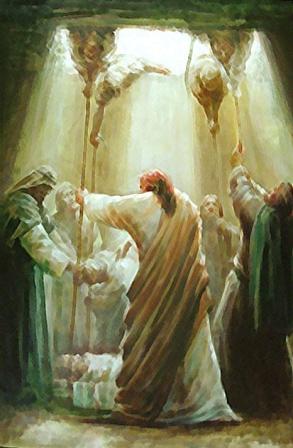
    Jesus heals the paralytic. Jesus often healed those who were hopelessly maimed or sick.

    physician. Jesus healed the medically untreatable and the hopeless, thus bringing glory to God. But he also recognized that sick people who were treatable by contemporary medicine needed a doctor.

Paul also sometimes utilized contemporary medical treatments to cure illnesses. He urged Timothy to take some wine for his stomach issues (1 Tim 5:23), and after one of his own beatings, he was treated by a jailer who bandaged his wounds (Acts 16:33). Indeed, Paul brought the physician Luke with him on several of his journeys (cf. Acts 16:10ff). We can surmise that Luke’s skills were often put into service.

5.) Misunderstanding Jesus’ coming into culture. Jesus entered the world in a particular time and place: namely, the 1st century in the Middle East. The New Testament thus describes his life in the social and cultural milieu of a 1st century Jew. He wore robes. We do not. He walked everywhere. We take the bus or drive a car. He ate bread and drank wine. We eat Chick Fil-A and drink Starbucks.

Are we wrong to live as 21st century Americans? No more than Jesus was wrong to live as a 1st century Jew.

Indeed, God expects us to live within our culture, as Paul reminds us in the book of Acts,

Pray for God to heal illnesses of all sorts, but also see a doctor. Medical professionals qualify as a “good gift from God” (James 1:17).

“God made from one man every nation of mankind to live on all the face of the earth, having determined their appointed times and the boundaries of their habitations” (17:26).

Since God has placed us in a particular culture and age with advanced medical technology, it is proper for us to use it. As James says in his epistle, “Every good and perfect gift is from above, coming down from the father of the heavenly lights” (James 1:17).

Modern medicine is a good gift from God, not something to be avoided or feared. We pray for healing, but we also see a doctor when our condition is treatable. By understanding the whole counsel of God’s word, we can avoid a narrow approach to faith-healing and the destruction that a simplistic approach can cause.

Destruction such as the deaths of Dustin Gilmore and Faith Pursely.

Rich Nathan, pastor of the Vineyard Church in Columbus, Ohio, has a clear message summarizing different aspects of faith-healing. I recommend it. You can find it here.

Update, 5/12/14: Here’s a good article by M. Dolon Hickman on a sect which practices faith healing and has consequently had many young children and infants die.

4 Comments

Ten Ways to Reach the Unreachable

Your son has stopped calling. Or your daughter.

Your sister’s mannerisms have changed. Now all she wants to talk about is her church and the wisdom of the leader. She stops showing up at family gatherings. She returns Christmas presents, unopened.

Your brother terminates a conversation. “Stop trying to deceive me,” he shouts. “You’re just another Christian hypocrite. I’ll never talk to you again!” He storms out the door.

Can you reach the unreachable? Is it even possible?

When a loved one is in a suspected cult, they may seem blinded to the truth.

As a former Bible-cult member for twenty-five years, I understand how difficult it can be to reach a loved one in a cult. It can truly seem impossible. God, however, is not limited by the impossible.

Here are ten things to consider when interacting with a loved one in a suspected cult. Notice that the first five all have to do with understanding. I believe that sincere understanding is the most important element if we want to reach a deceived loved one. Unfortunately, it is often the first thing we jettison in our panic over their strange beliefs and actions.

Ten Ways to Reach the Unreachable:

1.) Understand what you believe. Sounds strange, but the place to start is with yourself. What do you believe about God? About Jesus? Do you have a good grasp of Scripture? If your loved one is in a Bible-based cult, he/she grounds their beliefs on twisted scripture. You had better know your own foundational beliefs before you start trying to straighten out theirs. Otherwise, they will just quote happy circles around you and walk away feeling confirmed in their assumption that they are elect and you are doomed. For a good Bible resource, check out Bible.org.

2.) Understand the need for prayer and mature spiritual support. The Holy Spirit alone can disarm spiritual strongholds and break bondages. Since cults specialize in spiritual deception, the battle is primarily spiritual. Anyone who knows someone in a cult has likely encountered their glazed-over eyes and stilted demeanor. These folks are held captive by lies, but God can release them. Initiate corporate prayer and let your church know what’s happening. You need support in this battle.

3.) Understand the sincerity of their faith. What to you sounds bizarre, to them is divinely-inspired faith. The starting place for any conversation with a loved one in a suspected cult is to understand them. You don’t have to agree, but you must understand. Understanding provides the climate in which ensuing dialogue can take place. Understand in order to be understood.

4.) Understand what they believe. Ask lots of questions. Most cult members love to talk about what they believe since it is the most important thing in their life. They also want to convert others to their way of thinking. I know that I did. So ask questions. Take notes. Ask them to provide CDs or MP3s of sermons. Sit in on a meeting, if they let you (and if you think it is safe). Your loved one likely has an opinion on everything, so ask lots of questions and build a profile of their faith. This will tell you where they have gone off the rails.

5.) Understand what others say about them. Gather information. Once you have gotten a personal sense of what your loved one believes, correlate that information with news articles, media reports, and websites about the group. The Internet can provide many resources. The group in question may already be flagged as an aberrant organization. Do your homework and it will help you converse intelligently with anyone in the group.

6.) Avoid giving them books about cults. They don’t believe they are in a cult. Rather, they think that they have found the truth from God and that all other Christians are wrong. Giving them a book about cults will only make them consider you a threat. They will think you are an unsafe person who will never accept their message and are therefore not worth staying in touch with. I remember my former pastor dismantling “The Warning Signs of Cults” in an evening service while everyone in the congregation took notes, including me. We were a cult, but we couldn’t see it.

7.) Do give them resources about Christian doctrine. Ask if you can talk about what they believe and whether those beliefs line up with historical, orthodox Christian belief. They may claim that they follow the New Testament model for the church, or the book of Acts.

Charles Ryrie’s Survey of Christian Doctrine is one of the best books on systematic theology available. Short, readable, clear. I highly recommend it.

Wonderful! In that case, they shouldn’t mind providing feedback on a reputable book of Christian systematic theology which contains hundreds of New Testament citations (an excellent short read is Charles Ryrie’s Survey of Bible Doctrine). Their responses should help clarify their position and provide great opportunities for dialogue.

8.) Do show them how their beliefs are out-of-balance with scripture. Every Bible-based cult uses scripture to justify their actions. The problem is that those scriptures are taken out of context or are twisted to mean something the original authors never intended. Show me a cult and I will show you how they corrupt scripture or ignore scriptures that are intended by God to balance extremes. Anything can be justified by a Bible verse taken out of context. The beauty of true Christianity is that it takes a balanced approach to life which avoids aberrant extremes, delights in joy and freedom, and celebrates healthy personalities, choices, and giftings.

9.) Do discuss the nature of biblical salvation. Bible-based cults always confuse the manner and means of salvation. Instead of salvation by grace through faith (Ephesians 2:8), Bible-cults add works to this formula. They will say, “Yes, salvation is by grace through faith, BUT you must also prove your faith by your actions. If you are a genuine Christian you must bear spiritual fruit. We can judge someone’s salvation by their fruit.” Thus, they make salvation a works-based system rather than a free gift of grace as the Bible teaches. They confuse salvation with sanctification. But God’s gift really is free to those who believe: Jesus paid it all; there is nothing left to pay. The book of Galatians can help here.

10.) Cautiously point out inconsistencies in the leadership.This is tricky, and I hesitate to mention it, except that this is the very thing that helped to blow my own cult apart. Followers are trained to never make an accusation against a leader, but cult leaders are the

Only God can open the eyes of the blind. But he may choose to work through us.

Achilles heel of cults. Since every cult has a leader or leaders who are inspired by their own misguided beliefs or personality disorders, those leaders will evidence inconsistency between what they profess and what Scripture teaches. Legitimate spiritual authority is based on biblical truth and a character that is trustworthy. Explain to your loved one the biblical qualifications for elders and deacons (1 Timothy 3; Titus 1; 1 Peter 5) and hold the group’s leadership to these standards. Anything less is unbiblical.

In all of these steps, exercise patience. Love is patient. You may not see results immediately. There are no guarantees. But if you continue to seek understanding, ask questions, pray, seek corporate support, and gently point out inconsistencies of doctrine and behavior, perhaps God will use your unconditional love and wise words to reach the unreachable. It is God’s work, after all, and his heart longs to liberate captives.

He liberated me.

15 Comments

Why People in Cults Don’t Think They’re in Cults

I sat in my usual pew and stared at the yellow piece of paper on my lap. Warning Signs of a Cult, it said.

Around me, the rest of the congregation did the same. September sun had warmed the old sanctuary and wasps practiced silent minuets in the rafters. Fall nights are cool in Maine. I waited for the evening breeze to lick through the window screens and wick the sweat from my brow.

“Does everyone have the sheet about cults in front of them?” Pastor Ferris* asked.

I nodded.

“Good. This is a very important night for our church. The Lord has much to teach us tonight about discerning truth from error. I know you all want the truth.”

I nodded again. Indeed, the only response I knew in church was a nod.

“Let’s pray.”

I bowed my head. I guess I knew how to do that, too.

As Ferris prayed, my mind wandered over the events of the last couple of weeks. I had just started my junior year of high school. Then my twin brother, Cornelius*, decided to leave home. He said that our church was too controlling, too oppressive. That the pastor was manipulative. Though I shared some of his concerns, I also believed that it was because I was such a great sinner that I disliked our church. I believed that Ferris taught the truth of God’s Word and that I needed to conform my life to that message whether I liked it or not. I thought that my eternal salvation was at stake.

The results were devastating. Ferris had ordered us to shun Cornelius as one of those who “had gone out from us because they were not one of us” (1 John 2:19). Yes, for if he had been one of us, Scripture said, he would have remained with us. But he went out so that it would be shown that he was not of us.

We who remained, on the other hand, had an anointing from the Holy Spirit and we all knew the truth.

Well, sort of.

Actually, we who remained still lacked the anointing because most of us had come to see that we were not truly saved. We remained in our church because God had promised that if we remained we would eventually be saved. Ferris had said so, and I, for one, believed him. I knew the others did, too.

But not my brother. He had the spirit of the antichrist in him, and so he had left home and then had the temerity to pass on to our family a checklist of warning signs of cults.

He was wrong.

Our church was strict, I thought, but surely we were not a

The Branch Davidian compound burns in Waco, Texas.

cult. Cults were like Jim Jones or the Branch Davidians. Cyanide-laced Kool-Aid and Waco compounds stocked with guns. The ATF dealt with things like cults.

We were not a cult.

So my parents had given the list to Ferris, and now the Holy Spirit wanted Ferris to explain why the checklist was incorrect.

“Amen,” Ferris said.

I started out of my reverie. I had failed to pay attention to Ferris’s prayer. That was a sin, but no one had noticed so I pretended to have heard the whole thing. Lord forgive me, I thought. I pulled my hand from the paper but sweat made it stick and it gave a sharp tearing sound as I drew my hand away. The sanctuary was otherwise silent. I felt my face burn.

“As you all know,” Ferris said, “this checklist was passed on by Cornelius because he thinks that our church is a cult. God wants me to walk through this list to explain each item and why it is wrong. This is a sobering business, but it is important lest someone else in this congregation harbors doubt about what God is doing here.” He looked around meaningfully at the people, about sixty souls, and in the silence I could hear the wasps bumping in the rafters.

Ferris’s eyes shone. “You are all incredibly privileged—incredibly—and God is doing amazing things here. The world doesn’t understand that, because it is spiritually discerned. As the Bible says in 1 Corinthians 2:7-8, ‘We speak God’s wisdom in a mystery, the hidden wisdom which God predestined before the ages to our glory; the wisdom which none of the rulers of this age has understood; for if they had understood it they would not have crucified the Lord of glory.’”

I knew he was right. The world had rejected Jesus, and it would continue to reject his true followers through the ages. Only a very few would be saved.

I wanted to be one of them.

From outside the window came the sudden sputter and roar of a lawnmower.

Ferris spoke louder. “Scripture says, ‘Now we have received, not the spirit of the world, but the Spirit who is from God, so that we may know the things freely given us by God, which things we also speak, not in words taught by human wisdom, but in those taught by the Spirit, combining spiritual thoughts with spiritual words.…’”

I was having a hard time hearing him. We should close the windows, I thought, and turn the fans on.

“’…But the natural man does not accept the things of the Spirit of God, for they are foolishness to him, and he cannot understand them, because they are spiritually discerned. But he who is spiritual judges all things, yet he himself is judged by no one. For we have the mind of Christ.’”

The mind of Christ.

I wanted that. Yes, I realized, the mind of Christ can judge the world. The mind of Christ will know how to disarm the feeble arguments of natural man. I wished that the mind of Christ could also figure out how to disarm that lawnmower.

The throaty roar continued, reverberating through the chilly night and off of the pine trees. Through the church windows shouldered the stout scent of cut grass.

Ferris paused behind his lectern. “Let’s ask the Lord to make that lawnmower stop,” he said. We bowed our heads and prayed. Close the windows, I thought.

“Lord, please have our neighbor realize that they are disturbing our service,” Ferris prayed. “Please give them the consideration to stop cutting their grass. Amen.”

But the sound didn’t stop. Instead, it continued for a long, long time. Long enough to cut all of the neighbor’s grass.

Long enough to carry us halfway through the following checklist and why it didn’t apply to us:

Ten warning signs of a potentially unsafe group/leader:

  1. Absolute authoritarianism without meaningful accountability.
  2. No tolerance for questions or critical inquiry.
  3. No meaningful financial disclosure regarding budget, expenses such as an independently audited financial statement.
  4. Unreasonable fear about the outside world, such as impending catastrophe, evil conspiracies and persecutions.
  5. There is no legitimate reason to leave, former followers are always wrong in leaving, negative or even evil.
  6. Former members often relate the same stories of abuse and reflect a similar pattern of grievances.
  7. There are records, books, news articles, or television programs that document the abuses of the group/leader.
  8. Followers feel they can never be “good enough”.
  9. The group/leader is always right.
  10. The group/leader is the exclusive means of knowing “truth” or receiving validation, no other process of discovery is really acceptable or credible.

Ten warning signs regarding people involved in/with a potentially unsafe group/leader:

  1. Extreme obsessiveness regarding the group/leader resulting in the exclusion of almost every practical consideration.
  2. Individual identity, the group, the leader and/or God as distinct and separate categories of existence become increasingly blurred. Instead, in the follower’s mind these identities become substantially and increasingly fused–as that person’s involvement with the group/leader continues and deepens.
  3. Whenever the group/leader is criticized or questioned it is characterized as “persecution”.
  4. Uncharacteristically stilted and seemingly programmed conversation and mannerisms, cloning of the group/leader in personal behavior.
  5. Dependency upon the group/leader for problem solving, solutions, and definitions without meaningful reflective thought. A seeming inability to think independently or analyze situations without group/leader involvement.
  6. Hyperactivity centered on the group/leader agenda, which seems to supersede any personal goals or individual interests.
  7. A dramatic loss of spontaneity and sense of humor.
  8. Increasing isolation from family and old friends unless they demonstrate an interest in the group/leader.
  9. Anything the group/leader does can be justified no matter how harsh or harmful.
  10. Former followers are at best-considered negative or worse evil and under bad influences. They cannot be trusted and personal contact is avoided.

(Checklists from Rick Ross, http://www.culteducation.com/warningsigns.html)

*Not his real name.

110 Comments

The Death of Faith

A baby’s tragic death. “Strange” behavior by church members. Townsfolk concerned. The Media flummoxed.

In the East Texas town of Wells, a recent event highlights the danger of elevating one biblical teaching out of proportion to the rest of scripture. It shows why a church can be biblical and yet unorthodox.

The Death of Faith

On Saturday, May 26, three-day-old Faith Shalom Pursley died in the town of Wells after suffering respiratory complications.

According to local news reports, investigators with the Cherokee County Sheriff’s department discovered that Faith’s parents had followed the advice of elders in their church to pray over the baby rather than taking her to the

The small town of Wells, Texas (red dot)

hospital for treatment. After Faith’s death, members of the church continued to pray over her for fifteen hours before notifying authorities, hoping that God would raise her from the dead. Few outsiders would disagree that the church acted unwisely by disallowing medical intervention and instead focusing solely on prayer to heal the child.

Media coverage focused on the “bizarre” and “strange” practices of church members, though one reporter from local station KTRE noted that “On the surface, the church’s website doesn’t appear to be too radical compared to other Christian denominations.”

Townsfolk consider the church cultic and say it is unwelcome in their town.

A look at the church of Wells’s own website and an audio sermon from Faith Pursely’s memorial service provide a clearer picture of what the church believes and how they went astray. It also provides a warning to other churches that an imbalanced view of the Bible can promote unorthodox practices.

Adding Sorrow to Sorrow

On June 1, Sean Morris, one of three elders in the church of Wells, conducted Faith Pursely’s memorial service. The church posted Morris’s sermon on their website, “You Must Be Born Again,” [Update, 12/6/12: The Church’s website has now changed to “The Church of Wells”] along with the accompanying note:

To whom it may concern,

We are not ignorant of the slander of many, nor are we desirous to answer all of the accusations which have been cast in our teeth, adding sorrow to sorrow…. We have nothing to hide, and yet we did not (neither do we plan to) make a statement to our earnest inquirers (the news reporters)… We find it inconsistent with holiness to thus join hands with backbiters and talebearers in their fabulous tales. Thus have we refrained our feet from this way, and have declined open communication with such reporters.

We desire the sermon preached at the memorial service of Faith Shalom Pursley to suffice as a response to the many reports given (public and private). This sermon was preached to the purpose to answer the questions surrounding the the [sic] death of Faith, and various beliefs of the church which have been deemed (by the general public) everything but moderate. This is our humble stance upon these matters.

In his message, Morris addressed concerns from church members who fear that they might be part of a cult and that they should have sought medical treatment for the sick child. “As to the charge that we sinned as elders or as a church,” he said, “when that child died, we believed that it was God’s will to raise her. We don’t think that was a presumptuous thing. We’ve seen many miracles as a church and as individuals: demons cast out, healings. We weren’t just being foolish; we wanted God to be glorified.”

Indeed, explained Morris, church elders feared God and responded to scripture when they made their decision.

The Historic Wells Railroad Depot

“In 2 Chronicles 16:12,” Morris said, “King Asa sought not the Lord but the physicians, which means he put the physicians in a preeminent place. We are not against hospitals or the medical field. What we’re against is putting any of those things supremely over Christ, not giving him his place as God to heal, or to submit to the leadership of the Holy Ghost. In James 5 and Mark 16, Christ says that it is his will for his people to heal to his glory. Those scriptures have inspired us in the past, and they inspired us in the life of Faith. Sadly, we did not have [enough] faith to see the child healed.”

By Their Fruits You Will Know Them 

Most of the rest of Morris’s 50-minute sermon provided a summary of the doctrinal beliefs of the church of Wells. His message—packed with over thirty biblical citations—focused prominently on discerning the fruits of genuine salvation and determining by words and deeds whether someone is truly saved. Though unorthodox for a memorial service, Morris’s sermon highlights the focus of the church of Wells: zealous spiritual fruit-bearing and separation from lackluster professing Christians (Pharisees) through clear discernment.

Such discernment, Morris said, is commanded by Jesus Christ and is the reason why the church of Wells has separated itself from the world and the large mass of hypocritical professing Christians. It is also the reason why most church members have ceased to be in relationship with family members who are outside of the church. Members don’t want to be polluted by the leaven of the Pharisees, said Morris.

“Pharisees” in Morris’s terms are hypocritical Christians who don’t evidence the fruits of salvation, namely good works. Instead, said Morris, “The grace of God works because it takes work, because God has ordained work for us to do (Eph 2:10), and we want to be pure since only the holy will see God. We judge between those who are saved and those who are not by their fruits, since their words and deeds manifest what is in their heart. By their fruits you will know them.”

When the Cost of Fruit is Faith

Morris’s sermon helps explain why church members could sit and pray over a deathly sick—and then dead—child when medical services were readily available: they believed it was an act of faith which honored God and followed his word. Such fruit, they believed, is part of genuine Christianity.

While the church of Wells subscribes to faith in Jesus Christ and studies the Bible with zealous devotion, their extreme focus on “fruitfulness” and separation from the world has actually caused the church to become off-balance, and therefore unorthodox, in its practice. Sadly, this off-balanced approach to Christianity led—unintentionally—to the death of Faith Pursely.

At the risk of over-simplification, let me explain the three unorthodox steps as I see them:

  1. Excessive fear of contamination by culture. Morris’s sermon reflects an extreme fear of being polluted by culture and thereby not measuring up to God’s standards and not evidencing the fruit of true salvation. One reason the church moved to Wells from Arlington, Texas, was to find a remote place to live holy lives. While the Bible does warn against friendship with the world (James 4:4) and being polluted by the world (James 1:27), it also reminds us that God loves the world (John 3:16) and sent his Son incarnationally (in the flesh) into the world to live amongst sinners in the humdrum areas of life. “To the pure, all things are pure,” (Titus 1:15) and so believers do not need to live in paranoid fear of contamination from the world.
  2. Separation from other churches. The tight-knit church of Wells has severed ties with other churches, believing those churches to be full of hypocrites who do not evidence the fruit of salvation. The result of this separation is—inevitably—an environment of information-control, group-think, and fear of outsiders. Biblical passages are interpreted by the elders without outside input, and church members live in a world where information is filtered through the grid of the leaders’ interpretation. Not incidentally, the elders also place great stake in revelations from God, which in the case of Faith Pursely led to the decision to pray over the child rather than to take her to the hospital.
  3. Unbalanced biblical belief, uncorrected by external input. Since the church of Wells is led by several elders and promotes community life, the focus on fruitfulness (that is, works) and extreme commitment becomes a mantra unmoderated by other biblical commands.

Consider a horse and rider. If the rider holds both reins in his hands, the horse runs straight, or we might say, the horse is “orthodox.” “Ortho” is Greek for straight, like orthodontia makes your teeth straight. However, if the

A rider guides his horse with two reins. When both are in balance, the horse runs straight. Likewise, Christians must hold many biblical truths in tension to be orthodox in their faith.

rider pulls more heavily on one side of the reins, the horse turns in that one direction.

I believe that the church of Wells has probably veered off to one side by its single-minded devotion to “fruitfulness” and separation from the world. In the case of Faith Pursely, the elders believed that to avail themselves of medical treatment was a lack of faith, i.e. a lack of spiritual fruitfulness, and that if they believed hard enough the baby would be saved. Their “faith” in God was actually a misplaced sense of duty to believe, i.e., a work they had to perform. This is shown by the fifteen hours of corporate prayer devoted to the child after her death in hopes that God would respond to their great faith and raise the child. As Morris tellingly related in his memorial sermon, “Sadly, we did not have [enough] faith to see the child healed.”

Whether the church of Wells is a cult—as townspeople claim—or not, is beyond the scope of this post. But what seems clear is that an exaggerated preoccupation with one biblical truth to the exclusion of others has led to off-balance, unorthodox practices. A church can be biblical but still not orthodox. The small church of Wells seems to have lost hold of a healthy faith by focusing almost exclusively on fruit.

And in this case, the price of such fruit was the death of Faith.

Update, 10/16/12: The Church of Wells recently posted a series of articles on their website defending their beliefs and rebutting their critics. In the interest of full-disclosure and to promote critical thinking, I am including a copy of Sean Morris’s “Open Response to Steve Smith and Liberty for Captives” here. I still believe that the post above is fair-minded.  Any errors have already been pointed out in the comments section below.

I do not claim to be anything other than what I am: a seminary student, cult survivor, and follower of Christ who desires to see other people set free from legalistic and controlling religious groups.

I encourage readers to compare the contents of Morris’s letter with the contents of this website and to draw your own conclusions. I also encourage readers to recall that at the end of the day, this group’s prophecies and predictions proved false and a baby was allowed to die. Saying there is a problem does not make me the problem.

Update, 2/20/14:  In a similar case, a Pennsylvania couple was just convicted of third-degree murder and sentenced to prison time and probation after they withheld medical help from their children: “Philadelphia Common Pleas Judge Benjamin Lerner told the couple that it was not their son’s time to die. ‘You killed two of your children … not God, not your church, not your religious devotion — you,’ the AP reported.” Here’s the link to the HuffPost article.

Update, 5/15/14: There’s a helpful new website about the Church of Wells which questions its doctrine and exposes some of its harmful practices. You can find it here: http://www.thechurchofwells.org/

Related Posts:

Does the Church of Wells Teach a False Gospel?
Faith Healing? Trust in God, but See a Doctor
Why People in Cults Don’t Think They’re in Cults
Wisconsin Faith-Healing Case May Set Precedent
Ten Ways to Reach the Unreachable
Fixing a Frankenstein Faith: Ten Distortions of Scripture and How to Correct Them
Frankenstein Faith: Love Thy Neighbor But Hate Thy Parent
10 Questions A Church Should Ask When it Receives Bad Press
To Train Up A Child… Abuser (Part 1)
To Train Up A Child… Abuser (Part 2)
Eight Ways to Identify Religious Brain-Washing (Part 1 of 8)
15 Signs of False Humility
Ten Major Symptoms of Spiritual Abuse

4 Comments

Beginnings

Beginnings sometimes start at the end.

To understand why I chose to create this blog, you need to understand what I disovered two years ago. My life would never be the same.

~~~

Something bad was about to happen.

“What’s wrong?” Teresa asked.

She stared at me from the other side of the car. A light rain pattered on the roof. Early evening shoppers bustled in and out of the Corner Bakery off of Preston Road in Dallas. We had come here for a quick dinner, but now we sat in the car with our stomachs growling, trying to figure out life. Trying to figure out about us.

I sat gazing at the steering wheel, numb with fear.

“Steve, what’s wrong? You said you couldn’t date me, but you didn’t say why. You have to say something.”

Rainy evening at the Corner Bakery.

Between my fingers, I slowly crumbled a tissue into white pulp. I heard the rain on the roof and watched a woman in a pink sweatshirt run from her SUV to the Bakery entrance.

It was hard to think. But Teresa was right, I must have something to say, some reason to give to explain why I couldn’t start dating her. My mind felt thick and stiff, like scar-tissue on a finger joint.

I said nothing.

Teresa sighed. She had exercised patience with me, but I could tell that we were on the verge of a catastrophe. I had told her we couldn’t date, but I had no valid reason. God seemed to be bringing us together. We had the same interests, the same vision for ministry, and we were in love. But dating would be wrong, I thought. Wrong. So very wrong. Ferris* had said so.

Teresa looked at me and I saw the corners of her mouth turn down. “Then can you at least tell me what you feel right now?”

I felt… nothing. My feelings were tropical fish swimming behind a thick plate of glass. I could see them but not touch them. I looked at the glass. A large ugly fish stared back at me.

“I feel numb,” I whispered. Something bad was about to happen.

“Numb? Then why are you shaking?”

In my hand, the tissue wad trembled. Something bad… something bad… something bad was about to happen.

“Because I’m afraid.” There it was. The ugly fish behind the plate glass was fear. I could see that now.

Teresa nodded. “What are you afraid of?” she asked gently.

This is wrong, I thought. I mustn’t go here. I mustn’t speak forth the problem.

Rain drummed on the roof. We waited a long time.

Finally, “I’m afraid of Ferris.”

“You’re afraid of Ferris? But honey, he’s your pastor. You shouldn’t be afraid of your pastor.”

I knew it. But it was true. I was so afraid of him. My fingers shook and down my back slicked a hot patch of sweat.

Teresa reached over and put her hand on top of mine. Bits of tissue stuck to her palm. Snot dripped from my nose. My skin prickled, like galvanized metal conducting a low current.

“Honey, you shouldn’t be afraid of your pastor. If that’s the primary feeling you have when you think of him, then that’s wrong. Wrong of him. That’s not healthy, Steve.”

And for the first time in my life, I knew that Ferris was wrong.

Wrong.

Not just something that he had done, but he was wrong, himself. How he lived. How he spoke. How he said that he represented God in my life. All of his manipulation and control and lording it over the flock. All of it was wrong.

And it had been wrong from the beginning.

~~~

*Not his real name.